

What if the fastest route to real job skill wasn’t another classroom, but working beside a pro?
Apprentice learning is exactly that: a hands-on, mentor-led path where beginners watch, do, and get feedback in real work.
Programs like this cut training time, build confidence with small wins, and leave students with real projects employers value.
In this post we’ll break down the core model, mentorship tricks, and simple assessments so you can design or join an apprentice program that actually prepares people for work.
Core Foundations of Apprentice Learning Models

Apprentice learning is a structured, hands-on approach where beginners pick up workplace skills through real job training guided by experienced mentors. It’s rooted in the old master-apprentice tradition and backed by experiential learning theory, putting actual practice at the center of skill development. Instead of faking tasks in a classroom, apprentices work next to professionals in live business settings. They watch workflows, practice techniques under supervision, and slowly take on tougher responsibilities as they get better. This learning-by-doing method creates a straight shot from instruction to being job-ready.
Training on the job mixes three main activities: watching, doing tasks with supervision, and tackling skill challenges that build up over time. A typical youth program might involve six workplace sessions each week, two hours per session, adding up to about 12 contact hours over the whole thing. During each visit, apprentices rotate through different jobs. Shadowing a mentor during customer interactions, practicing communication scripts, troubleshooting equipment, preparing reports. The mentor tweaks difficulty week by week, gives feedback after each task, and backs off as the apprentice shows they’ve got it. This step-by-step structure keeps learners hooked while building confidence through small, real wins.
Training programs hit high completion rates and strong workplace readiness because the model lines up what learners want with what employers need. Programs serving middle-grade youth in Boston report 98 percent completion when apprenticeships get built into the school day and matched carefully to what students actually care about. Apprentices stay motivated because progress is something they can see. Their work contributes to real business outcomes, they earn recognition from mentors, and they walk away with portfolios of completed projects. Employers get early access to talent, less turnover, and workers who understand company culture from day one. The combo of structured support, immediate application, and authentic work challenges makes apprentice learning one of the most effective models for workforce prep across ages and industries.
Apprentice Learning Pathways and Structured Program Models

Skill-based progression anchors most formal programs, meaning learners move forward by showing they can do specific things rather than just logging hours. A typical youth program might start with six weekly career-building classes covering résumé writing, figuring out your strengths, workplace communication, and speaking up for yourself. These foundational modules get apprentices ready for real-world expectations before placement. Once on-site, apprentices follow learning roadmaps tied to things you can measure. Completing a customer intake form without errors, preparing a financial spreadsheet, safely operating equipment. Each module feeds into the next, creating a clear path from classroom foundation to workplace performance. Employers and training providers work together to map curriculum so classroom instruction directly supports tasks apprentices will actually do on the job.
Blended and digital models expand access and flexibility. During the 2020–2021 school year, a lot of programs went virtual. Remote apprenticeships where students logged into live business meetings, completed digital projects, and got mentor feedback through video calls and shared workspaces. Virtual shifts let apprentices tap into a wider range of employers beyond their immediate area and helped students who couldn’t get transportation easily. Hybrid models combine short in-person orientations with ongoing remote collaboration, balancing hands-on skill practice with the reach of online tools. Digital programs also use e-portfolio systems where apprentices upload artifacts like code samples, design mockups, client emails to document what they can do in real time.
Structured program models usually include:
- Core curriculum pieces like communication skills, workplace norms, industry-specific tools, and safety protocols delivered through pre-placement workshops or online modules
- Required skill benchmarks tied to tasks apprentices must complete on their own, like processing transactions, drafting reports, or troubleshooting common issues
- Typical workplace tasks assigned weekly, including shadowing experienced staff, helping with customer interactions, managing inventory, or contributing to team projects
- Expected learning outcomes that spell out what apprentices will know and be able to do by program end, often mapped to industry credentials or employer hiring standards
- Methods for weaving in virtual modules like live video mentoring sessions, skill demonstrations you can do on your own time, shared digital workspaces, and remote project reviews
Mentorship Structures and Workplace Skill Development in Apprentice Learning

Mentorship programs provide the human infrastructure that turns workplace exposure into structured learning. Mentors guide apprentices through hands-on tasks, model professional behavior, and create safe spaces for practice and feedback. Good mentors balance showing with letting go. They show an apprentice how to complete a procedure, then step back to let the apprentice try while staying close enough to coach through mistakes. Breaking complex workflows into smaller steps, introducing one skill at a time, and layering in new challenges only after foundational skills are locked in. This approach prevents overwhelm and builds confidence through wins you can actually see.
Mentors help students practice communication, speaking up for themselves, and reflective learning by embedding these skills into everyday tasks. When an apprentice gets a confusing instruction, the mentor coaches them to ask clarifying questions instead of guessing. When an apprentice messes up, the mentor leads a quick reflection. What happened, what clues did you miss, what would you do differently next time. Over six weeks of two-hour sessions, these repeated small interactions develop professional habits that carry over to other jobs. Mentors also explain workplace culture, the unwritten rules about punctuality, email tone, asking for help, and managing conflict. Youth programs serving 300-plus students annually keep mentor-to-apprentice ratios between one-to-one and one-to-four, making sure each apprentice gets individual attention and timely feedback.
Peer learning and small-group collaboration add another layer of skill development in workplace settings. Some programs place two or three students at the same site, creating chances to compare notes, troubleshoot problems together, and watch how peers tackle similar tasks. Group apprenticeships also cut down on intimidation. New learners feel less isolated and more willing to ask questions when they see others working through the same uncertainties. Workplaces that host groups of apprentices often schedule quick debriefs at the end of each shift, where apprentices share what they learned and mentors lead group reflection.
Mentor Coaching Methods
Specific strategies mentors use during short weekly sessions include modeling, guided practice, timed repetition, and feedback cycles. Modeling means the mentor completes a task start to finish while talking through each decision out loud, letting the apprentice see the full workflow before trying it themselves. Guided practice follows: the apprentice does the task while the mentor watches, offering real-time prompts and corrections. Timed repetition builds speed and fluency. Apprentices practice the same procedure multiple times across different contexts until it becomes automatic. Feedback cycles close the loop: after each attempt, the mentor highlights what went well, names one specific improvement, and sets a target for the next rep. During a two-hour shift, an apprentice might cycle through modeling, guided practice, independent repetition, and feedback two or three times, compressing weeks of classroom theory into immediate, corrected application.
Designing Assessments and Measuring Progress in Apprentice Learning

Weekly feedback from mentors supports continuous progress and stops small misunderstandings from becoming stuck habits. After each workplace shift, mentors review what the apprentice got done, highlight specific strengths, and point out one or two focus areas for next time. This real-time assessment happens informally through conversation. “You handled that customer question really well; next time, try confirming their order back to them before ringing it up.” But lots of programs also use structured check-in forms or digital apps where mentors rate apprentice performance on predefined skills. Frequent, low-stakes feedback keeps learning visible and lets apprentices self-correct quickly. Programs serving middle-grade youth often pair mentor feedback with reflective journaling prompts, asking apprentices to write down what surprised them, what felt challenging, and how they plan to improve.
End-of-program assessments happen at completion and verify that apprentices have met all required skills. Common approaches include portfolio-of-evidence submissions, where apprentices compile artifacts showing skill mastery. Completed work samples, photos of projects, mentor evaluation forms, self-assessments, and résumés updated with new skills. Some programs do structured interviews or practical demonstrations, asking apprentices to perform key tasks independently while an evaluator scores them against a rubric. Digital e-portfolio systems make this smoother, letting apprentices upload evidence throughout the program and automatically generate completion reports tied to skill frameworks. End assessments also capture things you can’t always measure with numbers, like increased workplace confidence, expanded professional networks, and clarity about career direction.
| Skill Area | Assessment Method | Evidence Type |
|---|---|---|
| Workplace Communication | Mentor observation rubric + recorded interaction sample | Completed customer service transcript, email to supervisor, presentation slides |
| Technical Task Execution | Performance checklist completed independently | Photos of finished product, process documentation, quality check sign-off |
| Self-Advocacy and Reflection | Weekly journal entries + end-of-program reflection essay | Written narrative describing challenges and problem-solving strategies used |
| Professional Habits | Attendance log + mentor rating of punctuality, preparedness, and collaboration | Timesheet records, completed pre-shift checklist, peer feedback form |
Industries and Career Sectors Using Apprentice Learning Models

Apprentice learning models run across all kinds of sectors, from traditional trades to emerging tech fields. Programs partnering with 70 business partners and serving 300-plus students annually show just how wide the range of industries is when it comes to hosting apprentices. Employers like apprenticeships because they can shape talent to fit specific needs, cut long-term hiring costs, and build diverse pipelines of workers who understand company culture before taking permanent roles. Youth programs focus on career exposure and foundational skill-building, while adult programs target credential completion and job placement. No matter the industry, apprenticeships share common features: mentorship, hands-on tasks, and structured skill development.
Sector-specific programs adapt the model to match workplace realities. In healthcare settings, apprentices might shadow nurses during patient intake, help with inventory management in pharmacies, or support admin workflows in medical offices. Tech firms place apprentices in roles like user experience testing, code debugging under supervision, or technical support ticket resolution. Manufacturing programs involve machine operation, quality inspection, and production line troubleshooting. Each sector tailors training duration, mentor ratios, and skill benchmarks to industry standards, but the learning-by-doing method stays consistent. Some programs target underrepresented populations. Women in STEAM fields, youth from under-resourced communities, English language learners. Using apprenticeships as pathways to careers where they’ve historically faced barriers.
Common sectors and example tasks apprentices do include:
- Commercial kitchens and hospitality: prep work, food safety protocols, customer service, inventory rotation, and menu item assembly under chef supervision
- Pet stores and animal care: product recommendations, cage cleaning, animal handling, customer education, and inventory restocking
- Bike shops and retail: equipment repair, customer consultations, point-of-sale transactions, and seasonal maintenance scheduling
- Real estate development: helping with site visits, preparing market research reports, data entry for property listings, and client communication
- Tech firms: software testing, help desk support, website content updates, social media scheduling, and user feedback analysis
- Sports arenas and event venues: equipment prep like skate sharpening, crowd management support, concession operations, and facility setup tasks
Apprentice Learning Benefits for Learners, Employers, and Communities
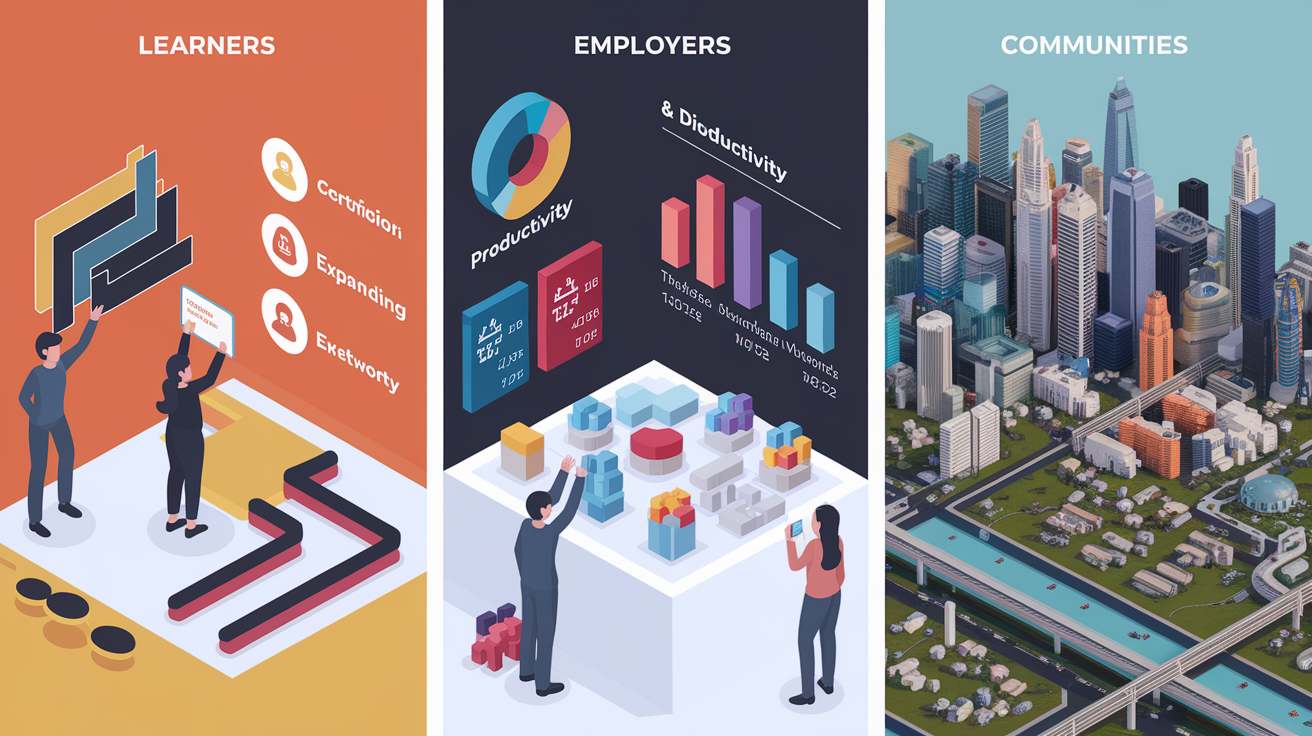
Benefits for apprentices include bigger networks, more confidence, and clearer long-term career direction. Youth who finish programs report feeling way more comfortable in professional environments, understanding workplace expectations, and knowing what career paths interest them. A six-week spot in a commercial kitchen might introduce a student to culinary careers, hospitality management, and food safety certification routes. Another apprentice working at a tech firm learns about software development roles, IT support paths, and client relations. These early exposures help students make smarter decisions about high school electives, college majors, and first job applications. Apprentices also build professional networks. Mentors, coworkers, and business owners become references, advisors, and connections who can open doors to internships or full-time positions. Programs serving more than 90 percent participants from under-resourced communities, English language learners, and students of color provide fair access to these network-building opportunities that wealthier peers often get through family connections.
Benefits for employers include workforce development, productivity, and community impact. Hosting apprentices lets businesses check out talent over multiple weeks without committing to permanent hires. Employers watch work ethic, problem-solving, and cultural fit in real conditions, cutting down hiring risk. Apprentices who do well often move into part-time or seasonal roles, creating a ready pipeline of trained workers who need minimal onboarding. Small businesses get access to motivated learners who bring fresh perspectives and energy, while large employers use apprenticeships to strengthen diversity and inclusion efforts. Employer return on investment also comes from lower recruiting costs. Programs handle screening, matching, and initial training, cutting the time and expense businesses spend finding candidates. Community ties get stronger when local employers invest in youth development, boosting the business’s reputation and building goodwill that drives customer loyalty.
Community impacts center on reaching underserved populations and improving school-to-career transitions. Programs originally launched to improve high school graduation rates succeed by connecting academic learning to real-world purpose. When students see how algebra applies to financial modeling at an asset management firm or how writing skills matter in client emails at a real estate office, school engagement goes up. Programs that build apprenticeships into the school day, rather than treating them as extra add-ons, reach more students and cut down barriers related to transportation, cost, and scheduling. Completion rates of 98 percent show that well-designed programs work for all kinds of learners, not just high-achieving students. Communities benefit from a more skilled, work-ready population and from local businesses that are better equipped to hire and keep diverse talent.
Funding, Incentives, and Cost Structures in Apprentice Learning

Typical funding models for programs combine public subsidies, grants, business partnerships, and philanthropic support. Government workforce agencies often give grants to nonprofits and training providers that design and run programs, covering costs like curriculum development, mentor training, and student transportation. Employers contribute through in-kind support. Staff time spent mentoring, workspace access, and materials. Or direct financial sponsorship when programs need stipends or wages for apprentices. Youth programs serving schools and community organizations frequently rely on foundation grants that fund expansion goals, like growing from five partner schools to ten and increasing annual reach from 300 students to 500-plus. These funding streams let programs offer apprenticeships at no cost to students and minimal cost to schools, removing financial barriers to participation.
Incentive schemes lower the cost burden on employers and encourage wider adoption. Tax credits and apprenticeship levy systems reimburse businesses for part of training expenses, mentor wages, and admin overhead. Small business support programs provide dedicated funding for employers with fewer than 50 employees, recognizing that smaller firms face tighter margins and less capacity to absorb training costs. Some regions offer completion bonuses, one-time payments to employers who keep apprentices through the full program and hire them afterward. Public funding also supports infrastructure like online matching platforms, mentor training workshops, and centralized assessment systems that reduce duplication and improve program quality across multiple employers.
Common funding sources include:
- Workforce development grants from federal, state, or local agencies targeting youth employment, underserved populations, or sector-specific skill gaps
- Employer co-funding through cash contributions, in-kind mentorship hours, or equipment and materials provided to apprentices during training
- Apprenticeship levy schemes and tax credit incentives that reimburse a percentage of employer training costs or reduce payroll taxes for each apprentice hired
- Small business support programs offering higher subsidy rates, streamlined application processes, and technical help to assist smaller employers in designing and implementing apprenticeships
Participation, Recruitment, and Support Structures for Apprentice Learning
Programs partner with schools and employers to create structured recruitment pipelines that make diversity and inclusion a priority. A typical model involves five partner schools and 70-plus employers, serving 300-plus students annually. Schools identify eligible students, often all eighth graders in partner schools, and build apprenticeship prep into the academic calendar through career exploration classes, résumé workshops, and workplace readiness training. Students learn how to introduce themselves professionally, ask clarifying questions, request feedback, and handle workplace norms before ever stepping into a business. This prep reduces anxiety and sets clear expectations, contributing to the high completion rates programs achieve.
Diversity and inclusion strategies make sure apprenticeships reach underserved populations. More than 90 percent of participants in some youth programs are students of color, English language learners, or residents of under-resourced communities. Targeted outreach to specific schools, free transportation, stipends for paid internship tracks, and culturally responsive mentor training all support fair access. Programs also track demographic data and adjust recruitment when certain groups are underrepresented, working with community organizations and trusted messengers to reach families and students who might not otherwise consider career programs. Retention strategies include regular check-ins with apprentices during placements, peer group meetings where students share experiences, and quick response systems when apprentices face challenges at work sites.
Completion rate improvement depends on matching processes, workplace readiness prep, and ongoing support. Programs keep 98 percent completion by carefully pairing students with employers based on career interests, commute feasibility, and mentor availability. Mismatches increase dropout risk. Placing a shy student in a high-pressure customer service role or an extroverted student in solitary back-office tasks. Pre-placement interviews and interest surveys help training coordinators make thoughtful matches. Once on-site, apprentices get mental health and welfare supports through school counselors, program staff check-ins, and mentor training that focuses on emotional safety and trauma-informed practices. When apprentices run into difficulties, conflict with a coworker, confusion about tasks, or personal challenges affecting attendance, support staff step in quickly, mediating issues and adjusting placements if needed.
Selection and Support Framework
Matching processes start with career interest inventories and student reflection exercises that identify strengths, preferences, and learning goals. Training coordinators review available placements across partner employers, considering factors like shift timing, physical demands, transportation routes, and mentor communication styles. Students often submit ranked preferences, and coordinators balance student choice with capacity constraints and employer needs. Workplace readiness prep includes role-playing common scenarios. Greeting a supervisor on the first day, asking for help when stuck, responding to constructive feedback. And reviewing workplace policies around punctuality, dress codes, and confidentiality. Mental health and welfare supports include access to school counselors, designated program staff who serve as points of contact for concerns, and mentor training that covers recognizing signs of distress, de-escalating conflicts, and creating inclusive environments. Programs also set up clear escalation protocols so apprentices know how to report unsafe conditions, harassment, or any situation where they feel uncomfortable or unsupported.
Implementation Guide for Schools, Employers, and Training Providers Using Apprentice Learning Models

Implementation lessons from programs serving 300-plus students show that embedding apprenticeships into the school curriculum increases participation and makes career exploration feel normal as part of education. When apprenticeships are optional extras, only highly motivated students enroll, and logistical barriers like transportation and scheduling shut out many who would benefit. Embedding apprenticeships into eighth-grade or ninth-grade coursework makes sure all students get exposure and provides dedicated class time for prep activities. Schools assign staff to coordinate placements, communicate with employers, track attendance, and troubleshoot issues. Successful programs also prepare students for workplace expectations through structured lessons on professional communication, résumé building, speaking up for yourself, and reflection practices, so apprentices arrive ready to engage and learn.
Partner recruitment involves identifying employers willing to commit mentor time, provide meaningful tasks, and support program goals around youth development. Training providers start by mapping local industries with entry-level career pathways and strong demand for skilled workers. Healthcare, technology, hospitality, skilled trades, retail. Then reach out to businesses through chambers of commerce, industry associations, and direct outreach. Employers value clear communication about program structure, mentor responsibilities, and expected time commitments. A typical ask is two hours per week for six weeks, plus brief pre-placement meetings and end-of-program evaluations. Virtual delivery considerations became critical during 2020–2021, when programs adapted by offering remote apprenticeships through video calls, shared digital workspaces, and project-based tasks apprentices completed on their own time with mentor feedback. Virtual models expand geographic reach, reduce transportation barriers, and allow access to employers beyond the immediate community.
Measurement targets guide continuous improvement and help programs show impact to funders and stakeholders. Common metrics include completion rate (target 90 percent or higher), number of students served per year, number of employer partnerships, demographic reach (percentage of participants from priority populations), and post-program outcomes like high school graduation rates, college enrollment, or job placements. Programs also collect qualitative data through student reflections, mentor surveys, and employer feedback to understand what’s working and where adjustments are needed. Scaling models, like expanding from five to ten partner schools, require additional funding, staff capacity, mentor recruitment, and employer engagement, but proven frameworks can replicate across new sites when implementation steps are documented and shared.
Practical steps for institutions implementing apprenticeship learning include:
- Curriculum alignment: map apprenticeship skills to academic standards, integrate career-building lessons into existing courses, and set aside class time for résumé writing, workplace communication practice, and reflection activities
- Partner recruitment: identify 10–20 target employers per group, conduct outreach through industry networks, and provide clear written materials explaining program structure, mentor roles, and expected time commitments
- Mentor prep: deliver training workshops covering how to break down instruction, formative feedback techniques, trauma-informed practices, and communication strategies; provide mentors with task checklists and skill rubrics to guide apprentice learning
- Placement matching: collect student interest surveys, review employer capacity and task offerings, balance student preferences with logistical constraints, and confirm placements with signed agreements specifying start dates, schedules, and emergency contacts
- Virtual delivery considerations: set up video conferencing protocols, create shared digital workspaces for project collaboration, define what apprentices should complete on their own time, and schedule regular mentor check-ins to keep engagement and accountability up
- Measurement targets: set annual goals for student enrollment (e.g., 300+ participants), employer partnerships (e.g., 70+ businesses), completion rate (e.g., 95%+), and demographic reach (e.g., 90%+ from priority populations); track outcomes through attendance records, mentor evaluations, student portfolios, and post-program surveys
Final Words
You’ve seen how hands-on practice guided by mentors creates clear pathways with short workplace sessions and scaffolded assessment.
We walked through program structure, mentor coaching methods, recruitment, funding, and measurement tools, plus concrete timelines like six weekly two-hour shifts and the high completion rate.
Use this as a practical map. With mentor support and the right steps, apprentice learning builds real skills and workplace confidence. You can start small and scale up.
FAQ
Q: What is the meaning of apprentice learning?
A: The meaning of apprentice learning is a hands-on, mentor-guided approach where learners build job skills through real work, following the master-apprentice model and experiential learning, often in short placements like six weekly two-hour sessions.
Q: What is apprentice learning?
A: The meaning of apprentice learning is a hands-on, mentor-guided approach where learners build job skills through real work, following the master-apprentice model and experiential learning, often in short placements like six weekly two-hour sessions.
Q: What is the highest paying apprenticeship program?
A: The highest paying apprenticeship program varies by industry and region, but advanced trades and tech apprenticeships, such as electrical, plumbing, and software development, often pay the most and accelerate earnings quickly.
Q: What is the $5000 apprenticeship incentive?
A: The $5000 apprenticeship incentive is a one-time grant used by governments or programs to encourage apprenticeships, typically paid to employers or learners to offset training costs, wages, or recruitment expenses.