

What if sitting in class stopped deciding whether you passed?
Competency-based learning does exactly that: it grades what students can actually do, not how long they sat.
This mastery-focused approach replaces seat time with clear competencies, shared rubrics, and reassessment so learners move on only after they prove a skill.
That means real skills like critical thinking, communication, and research get tracked.
Students can revise work, and colleges and employers see what learners can really do.
Core Foundations of Competency-Based Learning Explained

Competency-based learning measures students by what they can actually do, not how long they sat in class or how many points they racked up on assignments. You’ll also hear it called standards-based learning, mastery-based learning, performance-based education, or proficiency-based education. Different names, same idea: students move forward when they prove they’ve got the skills, not when the calendar flips to June. The skills being tracked are things that travel well, stuff like collaboration, communication, critical thinking, leadership, and digital literacy. Employers and colleges want these across the board.
Districts and states build out these competencies by creating a “portrait of a graduate.” Think of it as a framework with six to eight big skill areas. Each one breaks into smaller, observable pieces. A “communication” area might include citing sources correctly, adjusting your tone for different audiences, and presenting findings without mumbling. Content like math, science, English, and history becomes the playground where you practice and show off those skills. A student studying the Civil War isn’t just memorizing dates. They’re digging into primary sources, wrestling with conflicting accounts, and defending an argument. All while building research and critical thinking competencies tracked on shared rubrics.
In a traditional classroom, you get 73 percent on tests and homework, you get a C, and you’re on to the next course in June. In a competency-based classroom, that same 73 percent means you keep working the skill until you hit mastery. You get feedback on what needs fixing. You can revise and resubmit. No arbitrary ceiling, no hard stop tied to a semester calendar. More than 650 colleges now accept students who submit a mastery transcript, basically a portfolio of competencies and proof, instead of or alongside a traditional GPA. That’s a signal that seat time and grade averages don’t always show what a learner can actually do.
Structural Elements of a Competency-Based Learning Framework
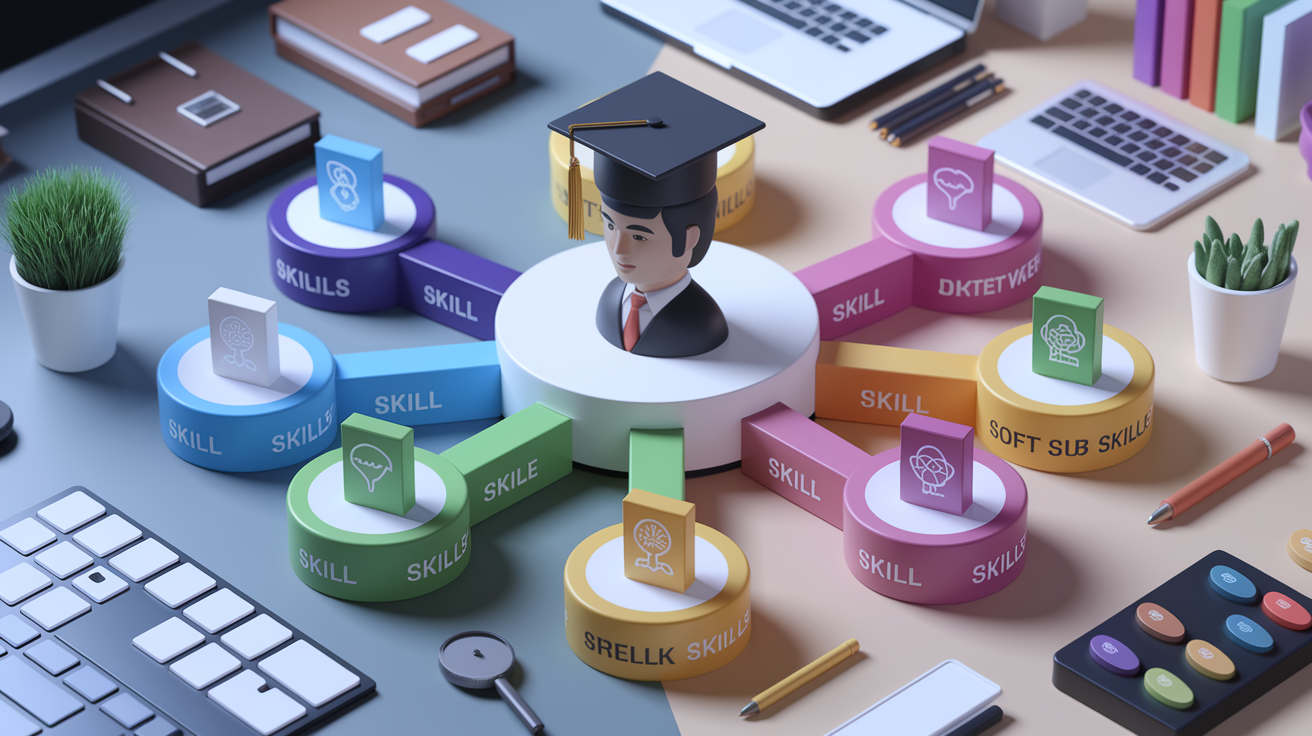
A solid competency framework starts with a clear, complete picture of what students should know and be able to do. Research published in Medical Education (Albanese et al., 2008) says competencies share five traits: they focus on an outcome instead of an activity, they reflect expectations from outside the program like workforce or civic demands, they can be measured and observed, they’re judged against a fixed standard instead of against other students, and they communicate those expectations clearly to everyone involved. Competencies aren’t just generic learning outcomes. They bundle knowledge, skill, attitude, and professional habits into one complete performance.
Building a competency system means breaking broad skills into tiny, atomic learning objectives. If “research” is your top skill, the framework needs to spell out what research looks like at each stage. Locating credible sources, annotating a bibliography, synthesizing different perspectives, citing correctly, reaching out to a live expert. Each smaller piece ties to a performance indicator and a rubric level so teachers and students can pinpoint exactly where growth is happening and what’s next.
The design criteria that make competencies work in real classrooms:
Product focus. Students demonstrate a finished skill, not participation.
External expectations. Competencies reflect real-world standards from employers, colleges, or civic life.
Measurable behavior. “Analyze conflicting sources” is measurable. “Understand research” isn’t.
Standard-based judging. Mastery is defined by a rubric, not a curve or class rank.
Clear communication. Rubrics and criteria are shared with students before the task starts.
Alignment with learning standards. Each competency maps to state or national content standards so the work satisfies accountability rules while building transferable skills.
Competency-Based Learning in Real Classrooms: Practical Examples

Definitions help, but examples show how this actually runs. When you see a nine-week seminar built around research rounds, peer feedback, and a live performance task, or a Shakespeare unit that doubles as a psychology research project, the abstract stuff turns into something you can picture in your own classroom.
Teachers in competency-based schools collect artifacts. Annotated bibliographies, presentation slides, written reflections, recorded roundtables. Students and teachers review those bodies of evidence together using consistent rubrics. Instead of defending a single test score, students defend their growth by walking through a portfolio and explaining which skills improved, where they still need work, and what they’ll tackle next. That makes learning visible and gives students real ownership.
Global Zoo Competency Seminar Example
This nine-week seminar asks students to research a global wildlife conservation challenge. The structure includes three rounds of research. In each round, students complete an annotated bibliography, write a summary of findings, and deliver a student-led presentation to the class. Peers give structured feedback using a shared rubric. One non-negotiable requirement: students must reach out to at least one live content expert. A zookeeper, biologist, policy analyst, or conservation nonprofit staff member. And they have to incorporate that expert’s perspective into their work.
The final assessment is a six-to-eight-person roundtable performance. Students synthesize all three research rounds, answer questions from peers, and get evaluated on competencies like citing sources accurately, formulating meaningful questions, synthesizing conflicting information, and adapting explanations for different audiences. The roundtable happens live and can’t be redone. But all the research artifacts can be revised and reassessed after the unit ends. If a student’s annotation skills were “emerging” in round one and “approaching mastery” in round three, they can polish earlier work and resubmit it to demonstrate full mastery, which raises their proficiency level on the research competency.
Cross-Disciplinary Hamlet Unit Example
In a traditional high school using competency-based methods, English teachers partnered with psychology and social studies departments to design a Hamlet unit. Students form psychological hypotheses about characters. Why does Hamlet delay? What drives Ophelia’s breakdown? Then they research established APA theories (cognitive dissonance, trauma response, attachment styles) that might explain the behavior. They consult outside experts, either by email or virtual interview, to pressure-test their theories. Finally, they present findings in a multimedia format, defending their thesis with textual evidence and research citations.
The unit satisfies all state English and language arts standards for close reading, argument writing, and textual analysis. At the same time, it targets competencies in research, critical thinking, written communication, oral presentation, and digital literacy. Teachers assess the work using the same research and communication rubrics applied in the Global Zoo seminar, so students see how the skills they’re building transfer across content areas. This shows that competency-based learning doesn’t replace content. It uses content as the context for practicing and demonstrating durable skills.
Assessment Methods That Power Competency-Based Learning

Competency-based classrooms rely on two main streams of evidence: formative assessments that guide daily learning and summative performance tasks that confirm mastery. Formative evidence includes draft annotations, peer-feedback sessions, quiz check-ins, and one-on-one conferences where the teacher asks, “What are you working on improving right now?” Summative evidence includes final portfolios, recorded presentations, research papers, or live performances evaluated against a detailed rubric. Both streams feed into a rolling gradebook, where earlier scores can be replaced by later ones as students demonstrate growth.
Rubrics are the backbone. A strong rubric breaks a competency into three to five performance levels (developing, emerging, approaching mastery, mastery, and sometimes extension) and describes observable behaviors at each level. For example, a citation rubric might say: “Emerging: most sources included but formatting inconsistent. Approaching mastery: all sources present, minor formatting errors. Mastery: all sources cited correctly in APA format with no errors.” Students use the rubric to self-assess before submitting work, and teachers use the same language in feedback, which keeps everyone aligned on what “good” looks like.
Consistency matters. When five teachers all assess “collaboration,” they need shared rubric language and regular calibration sessions to make sure an “approaching mastery” score in one class means the same thing in another. Many schools hold quarterly calibration meetings where teachers bring anonymous student work, score it independently, then compare ratings and discuss differences until they agree on what each rubric level means.
| Method | Purpose | Example Evidence | Reassessment Allowed? | Notes |
|---|---|---|---|---|
| Portfolios | Collect body of evidence across time and classes | Annotated bibliographies, reflections, presentation slides | Yes, students revise artifacts and defend growth | Requires digital platform or organized physical folders |
| Structured rubrics | Define performance levels for each competency | 4-level collaboration rubric shared across content areas | N/A, rubric is the assessment tool | Must be co-created by teachers and calibrated regularly |
| Performance tasks | Summative demonstration of integrated skills | Live roundtable, final presentation, capstone project | Usually no, live performances can’t be redone but supporting artifacts can | Design must balance authenticity with reassessment equity |
| Formative checkpoints | Track progress and provide next-step feedback | Draft reviews, exit tickets, peer-feedback rounds | Yes, built for iteration and improvement | Data informs instructional adjustments in real time |
| Rolling gradebook | Replace earlier scores with evidence of later mastery | Research competency rated “emerging” in Oct., “mastery” in Dec. | Yes, teacher exercises professional judgment using full body of evidence | Requires clear policy on which scores count and when |
Technology and Tools Supporting Competency-Based Learning Systems

Running a competency-based classroom without technology is possible but way harder. Digital platforms let teachers track dozens of students working on different competencies at different paces, store and organize evidence, generate real-time reports for students and families, and automate parts of the feedback cycle. The right tools make the invisible work of mastery tracking visible and manageable.
Three categories of technology show up in most competency-based schools. Data dashboards like MasteryConnect display each student’s current level on every tracked competency, flag students who need intervention, and let teachers filter by skill to form small instructional groups. Self-paced practice platforms like Khan Academy let students work through content at their own speed, earning badges or certificates when they hit mastery thresholds, which frees the teacher to spend class time on feedback and coaching instead of direct instruction. Assignment and rubric organizers like Google Classroom centralize task instructions, rubrics, and submission workflows so students always know what’s expected and can check their progress against criteria before submitting work.
More specialized tools support peer collaboration and assessment at scale. Packaged solutions often bundle multiple learning tools:
Peer assessment bundles. Peer review, group member evaluation, assignment review.
Feedback and assessment bundles. Seven tools including skill review, automated feedback, and a competency-based assessment add-on for accreditation evidence.
Group work bundles. Interactive documents, team-based learning modules, group formation tools.
AI feedback bundles. Automated feedback on drafts, AI-assisted practice exercises, assignment review.
Learning design systems. Fifteen-plus modular tools that integrate with existing learning management systems.
The technical backbone includes scalable data storage, student performance dashboards, and the capacity to combine formative feedback with summative records. Schools need a plan for who manages the platform, how data flows between systems, and how reports get shared with students, families, and college admissions offices.
Benefits and Challenges of Competency-Based Learning Models

Competency-based learning offers real advantages. Students focus on growth and next learning targets instead of chasing points or comparing themselves to classmates. There’s no ceiling. If a student masters the Grade 10 research competencies in September, they can keep advancing into Grade 11 and 12 expectations within the same course. Tasks align more closely with transferable skills that colleges and employers actually value, like synthesizing conflicting sources or defending a hypothesis under questioning. Students develop agency because they reflect on their own progress, articulate their growth in portfolio reviews, and make decisions about what to improve next.
Implementation is complex. Defining “mastery” can feel subjective without rigorous rubrics and teacher calibration. Assessment design must anticipate equity: live performance tasks like roundtables are hard to redo, so schools need clear reassessment pathways for supporting artifacts. Transitioning from traditional transcripts requires sustained engagement with colleges and employers to explain what competency records mean. The data load is significant. Tracking atomic competencies for 120 students generates thousands of data points per semester. Not all districts have the technical infrastructure or staff capacity to manage it well.
| Benefit/Challenge | Explanation |
|---|---|
| Benefit: Growth mindset and no ceiling | Students advance as soon as they demonstrate mastery. High achievers can progress beyond grade-level expectations within the same course. |
| Benefit: Transparency and student ownership | Rubrics and competency lists are shared upfront. Students self-assess, set goals, and defend growth in portfolio conferences. |
| Benefit: Alignment with real-world skills | Tasks mirror workplace and civic demands like research, collaboration, communication instead of recall-focused tests. |
| Benefit: Personalized pacing and feedback | Teachers provide targeted next-step feedback. Students work at individual pace rather than whole-class lockstep. |
| Challenge: High teacher workload and time investment | Creating personalized pathways, detailed rubrics, and tracking individual progress demands significantly more upfront planning and ongoing assessment labor. |
| Challenge: Defining and standardizing mastery | Without clear rubrics and cross-teacher calibration, “mastery” becomes subjective. Inconsistency undermines credibility and equity. |
| Challenge: Technology access and equity | Digital dashboards and platforms require reliable devices and internet. Under-resourced students and districts face barriers if tech is assumed. |
| Challenge: Accreditation and reporting systems | Traditional accountability frameworks expect seat-time metrics and standard test scores. Shifting to outcome-based reporting requires policy changes and new data infrastructure. |
Implementing Competency-Based Learning in Schools and Higher Education

Rolling out competency-based learning is a multi-year project, not a one-semester pilot. One district reported developing an interdisciplinary competency-based assessment system for Grades 8 and up over 25 years, refining rubrics, training cohorts of teachers, and adjusting workflows based on what worked in real classrooms. That timeline isn’t typical, but it shows the depth of cultural and structural change required. Schools that succeed start with a small, committed team, define a clear “portrait of a graduate,” and build systems step by step instead of trying to overhaul everything at once.
The first big decision is which competencies to track. A typical portrait of a graduate includes six to eight major areas, often communication, collaboration, critical thinking, creativity, digital literacy, leadership, global citizenship, and personal responsibility. Each area breaks into multiple observable sub-competencies. “Communication” might include oral presentation, written argument, visual design, active listening, and audience adaptation. Once the list is set, teams write rubrics that describe performance at developing, emerging, approaching, and mastery levels for each sub-competency. Those rubrics become the shared language across all content areas.
Next comes workflow design. Teachers need a system for collecting evidence (photos of group work, recorded presentations, written drafts, peer-feedback forms) and organizing it so students can build portfolios and teachers can assess without drowning in paperwork. Digital platforms help, but even a well-organized Google Drive structure with clear naming conventions can work. The key is consistency: if every teacher collects evidence differently, students can’t build coherent portfolios and cross-course assessment becomes impossible.
A successful implementation roadmap:
Define your portrait of a graduate. Convene stakeholders (teachers, students, families, employers, higher-ed partners) to identify six to eight priority competency areas.
Decompose into observable competencies. Break each area into atomic, measurable skills with clear performance indicators.
Co-create rubrics. Write detailed rubrics for each competency. Pilot them with real student work and revise based on teacher calibration sessions.
Build evidence-collection workflows. Choose a digital platform or organize a manual system. Train teachers and students on how to document and store artifacts.
Design formative and summative assessments. Map lessons and units to competencies. Build in reassessment pathways for all artifacts except live performances.
Provide professional learning and calibration time. Schedule regular sessions where teachers score common student work, compare ratings, and discuss what mastery looks like.
Communicate with families and postsecondary partners. Explain how competency records work, what transcripts will show, and how colleges interpret mastery-based evidence (cite the 650-plus acceptances).
Accreditation alignment matters, especially in higher education. Colleges adopting competency-based models must document how competencies map to degree requirements and demonstrate that graduates meet external standards for employment and postgraduate success. Some institutions use a competency-based assessment add-on integrated with their learning platform to generate accreditation-ready evidence automatically.
Measuring Success in Competency-Based Learning Environments
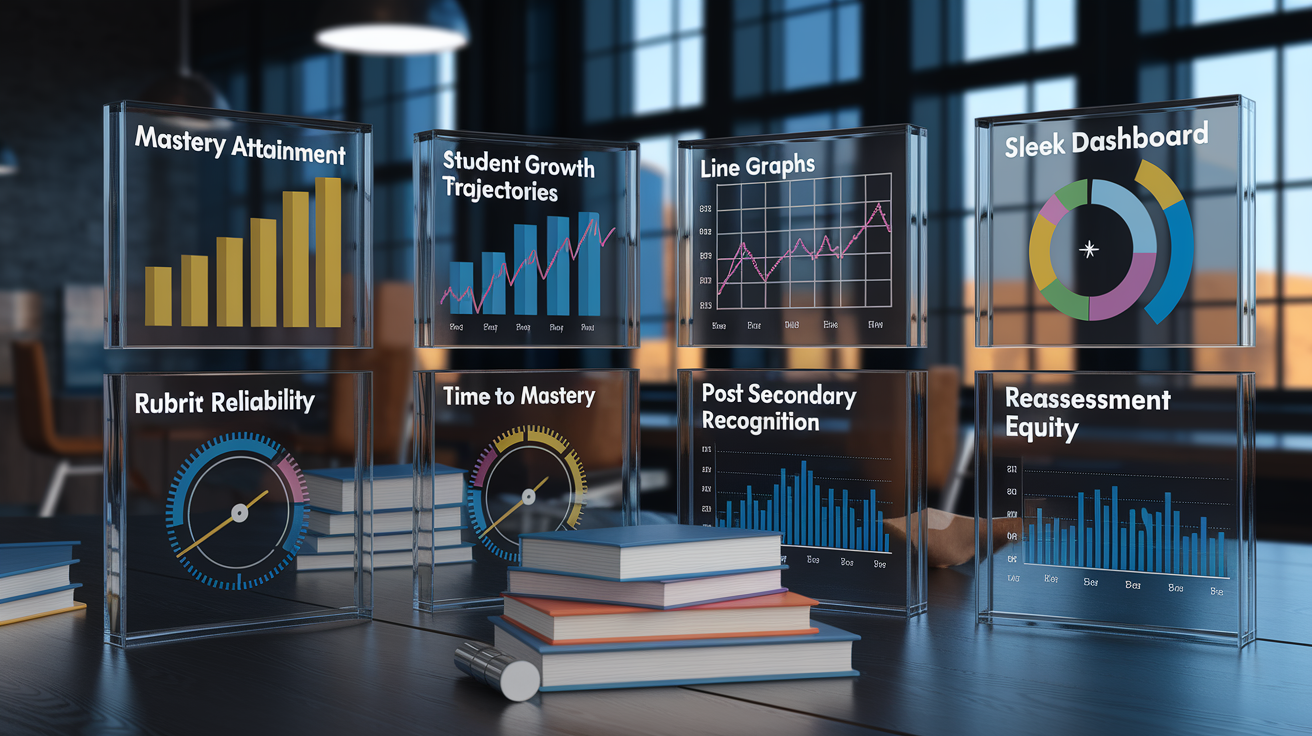
You can’t improve what you don’t measure. Competency-based schools track a different set of metrics than traditional schools because the goal isn’t higher test averages or more students earning B’s. The goal is more students reaching mastery on explicit, transferable skills. The core success indicator is mastery progression: how many students move from developing to emerging to proficient on each tracked competency over the course of a semester or year. A healthy system shows steady upward movement for most students, with targeted interventions catching those who plateau.
Portfolio strength is another key measure. Can students open their portfolio, walk through their evidence, and clearly explain what skills they’ve mastered, where they’ve grown, and what they’re working on next? If students can’t articulate their own learning, the system isn’t creating the ownership and self-awareness it promises. Teachers and administrators review portfolio conferences, listen for student voice and clarity, and flag patterns. If most students struggle to describe their growth in “collaboration,” the rubric or instruction probably needs adjustment.
Six metrics provide a complete picture of system health:
Mastery attainment rates per competency. Percentage of students reaching “mastery” or “proficient” on each tracked skill by end of term.
Student growth trajectories. Movement between rubric levels (developing to emerging to proficient) plotted over time for individuals and cohorts.
Rubric reliability and teacher calibration. Percentage agreement when multiple teachers independently score the same student work using a shared rubric (target: above 85 percent agreement).
Time-to-mastery variation. Range of time students need to reach mastery on a given competency. Wide variation may signal unclear instruction or inequitable support.
Postsecondary recognition. Number of colleges accepting mastery transcripts and employment or earnings outcomes for graduates (cited benchmark: over 650 colleges accept mastery records).
Reassessment utilization and equity. How many students take advantage of reassessment opportunities, broken down by demographic group. Low uptake among some groups may reveal hidden barriers.
Final Words
In the action, we showed what it is, how competencies are built, and what classrooms look like in practice. You saw structural elements, assessment methods, tech tools, benefits and challenges, and a step-by-step implementation roadmap.
If you try a small module or a portfolio pilot, you’ll test rubrics, reassessment, and tracking. competency based learning gives clear targets and real student agency. It’s doable, measurable, and worth trying.
Go ahead, start small and iterate—you’ll see progress quickly.
FAQ
Q: What is the meaning of competency-based learning?
A: The meaning of competency-based learning is an approach where students progress by demonstrating mastery of clear competencies (skills and knowledge), not by time spent; also called mastery, proficiency, or performance-based learning.
Q: What are the 7 competencies of CBC?
A: The seven competencies of CBC typically include communication, critical thinking, creativity, collaboration, digital literacy, self-management (learning-to-learn), and citizenship/ethical responsibility, which appear across portrait-of-a-graduate models.
Q: What are the 5 C’s of competency?
A: The 5 C’s of competency are critical thinking, communication, collaboration, creativity, and citizenship (or character), core transferable skills schools map into competency frameworks and rubrics.
Q: What is CBC called now?
A: The term CBC is now often called competency-based learning or competency-based education, and also goes by mastery-based, proficiency-based, performance-based, or standards-based learning in different systems.