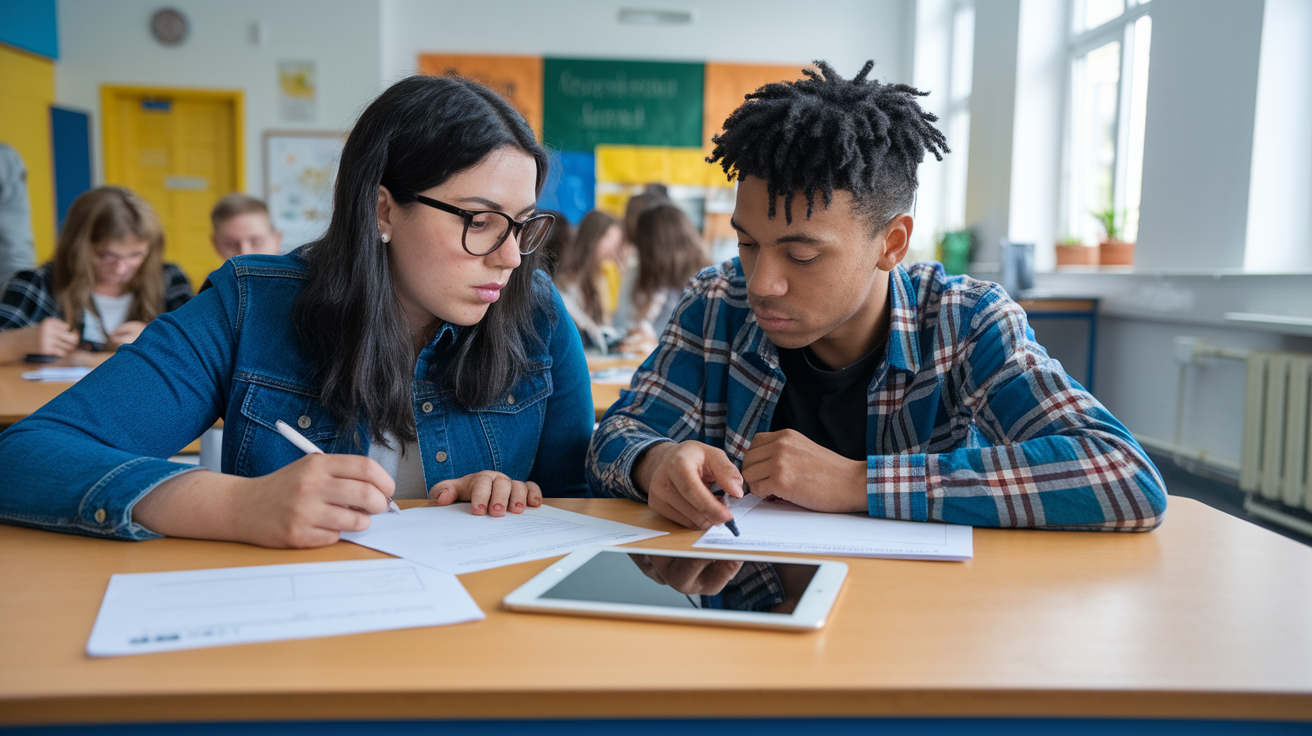
Think group work is just chaos and free-riding? It shouldn’t be.
Cooperative learning is different, it’s structured group work where students depend on each other, not just sit together.
When it’s done right, achievement, participation, and social skills all rise.
This post gives clear, classroom-tested strategies, like jigsaw, Think Pair Share, and Team Based Learning, plus step-by-step tips for setup, roles, accountability, and quick fixes when teams go off track.
Read on to turn noisy groups into focused learning teams that actually lift student outcomes.
Definition and Core Principles of This Instructional Approach
Cooperative learning is a structured way to organize group work where students actually depend on each other to get things done. It’s not just sitting together while everyone does their own thing. The teacher sets up tasks that nobody can finish alone, and every person’s contribution matters to the outcome.
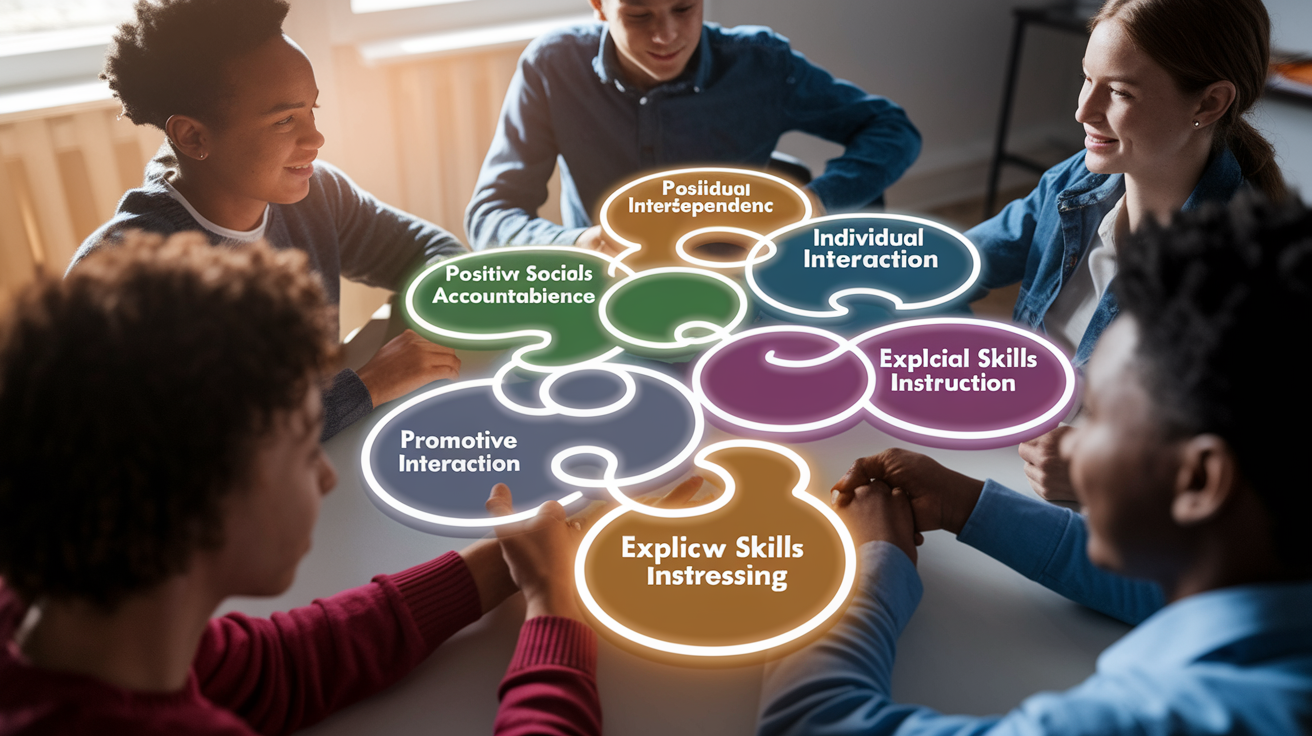
Five principles separate this from regular group projects:
Positive interdependence means students genuinely need each other. The task won’t work unless everyone plays their part.
Individual accountability keeps anyone from coasting. Each student has to show they’ve learned the material, not just the group overall. Teachers build in checks so nobody hides behind someone else’s work.
Promotive interaction is about students actively helping each other learn through explaining stuff, asking questions, and pushing each other’s thinking face to face.
Explicit social skills instruction means the teacher actually teaches how to communicate, handle disagreements, lead, and make decisions together. These skills don’t just appear.
Group processing gives teams regular time to step back and talk about what’s working, what’s not, and what they’ll change next time.
Foundational Principles That Guide Effective Group Learning
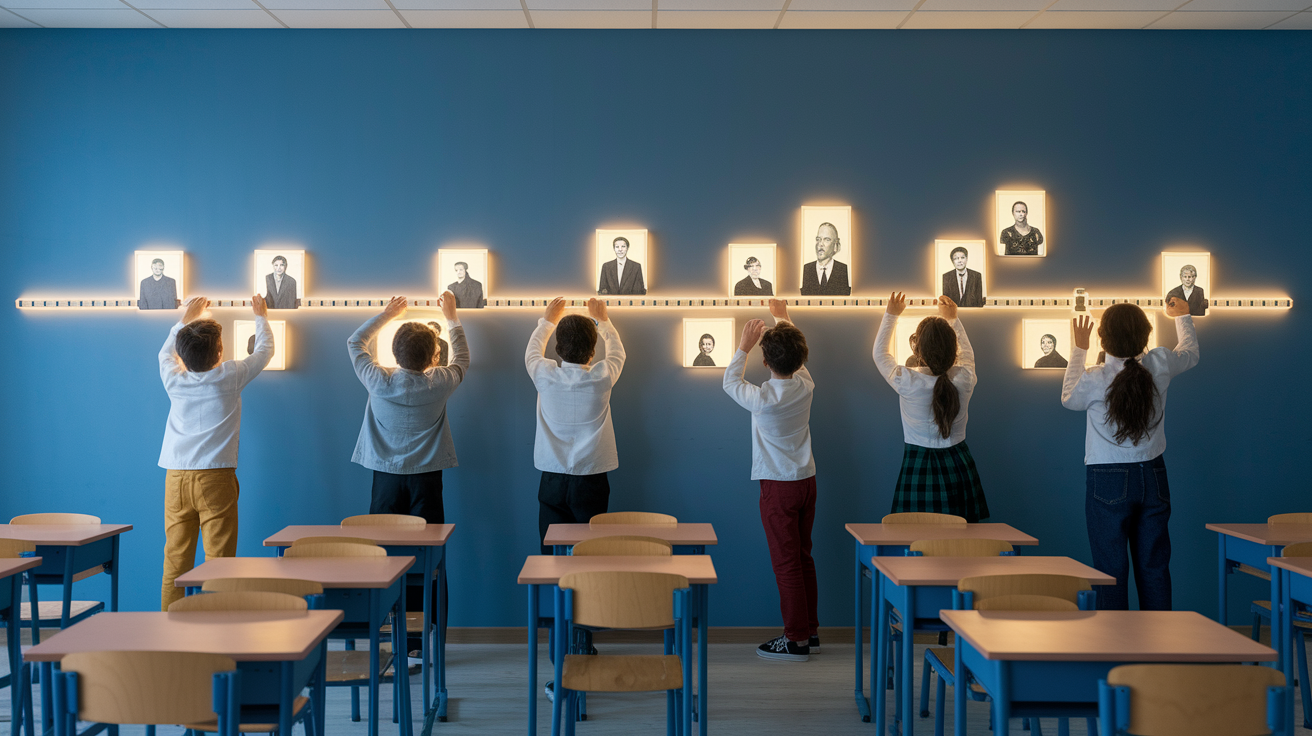
Positive interdependence means you sink or swim together. A teacher might break a project into parts where each student researches a different historical figure, then the whole group combines everything into one timeline presentation. Skip your part and the whole thing falls apart.
Individual accountability stops the free rider problem. Teachers use random reporter tricks (give everyone a number, call one at random to answer for the group), individual quizzes after group study, or ask students to sign the sections they personally did. When you know you might get called on individually, you stay engaged instead of letting the smart kid handle everything.
Promotive interaction goes deeper than dividing work and reporting back. Students teach each other, check understanding, give feedback while they’re working. A math group should talk through different ways to solve the problem, ask clarifying questions, test each other’s logic out loud. Peer teaching often sticks better than passively listening to a lecture.
Instructional Strategies Used in Structured Group Learning
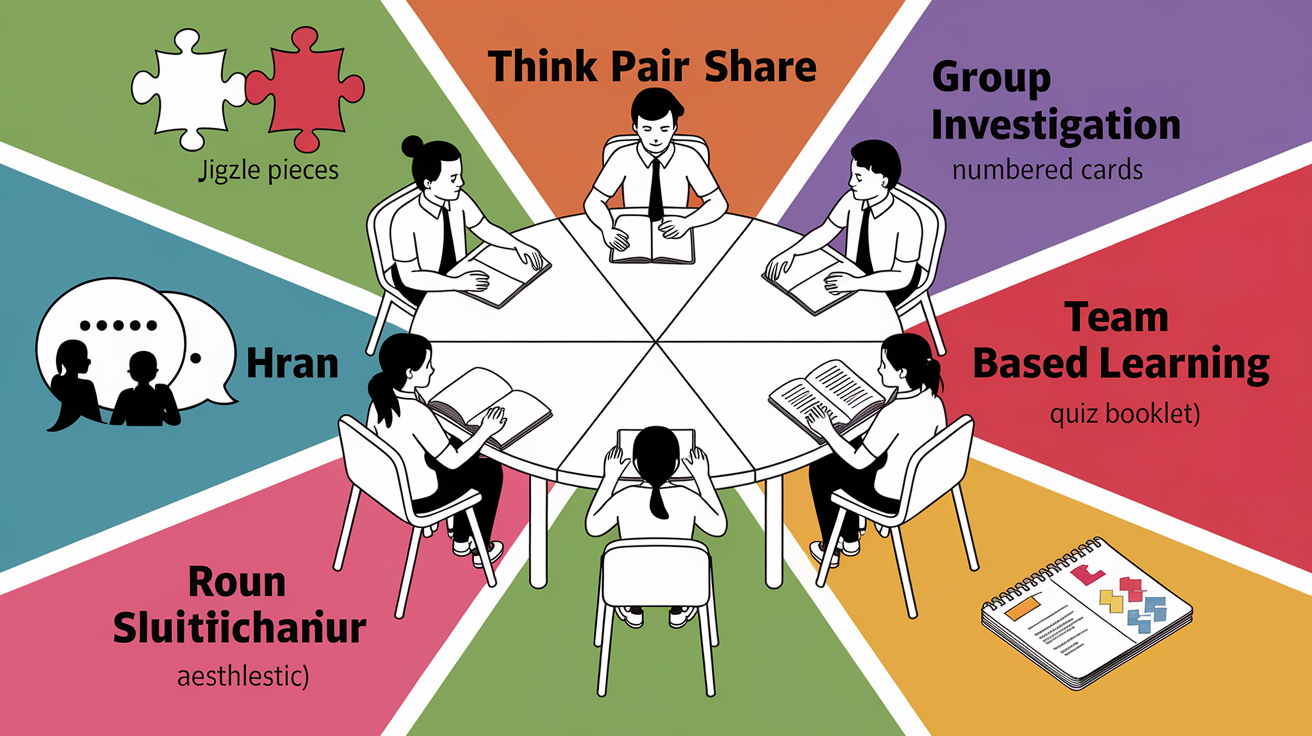
There are tons of ready to use structures, each built for specific goals.
Jigsaw splits students into home groups, then reassigns them to expert groups where they master one piece of content. Experts go back to their home groups to teach their part, making everyone essential.
Think Pair Share has students think alone about a question, pair up to discuss, then share with the class. Quick structure that forces everyone to process before any discussion starts.
Numbered Heads Together gives each group member a number. Teacher asks a question, groups talk it through to make sure everyone knows the answer, then the teacher calls a number. Only that student answers, holding the whole group accountable.
Group Investigation lets teams pick subtopics within a bigger theme, plan research, split up tasks, pull findings together, and present. Good for sustained inquiry and student driven work.
Team Based Learning has students do individual prep work, take a quiz alone, retake it as a team with instant feedback, then tackle complex problems together in class. Teams stick together for weeks or a whole semester.
Round Robin / Round Table rotates contributions. Oral Round Robin means taking turns sharing one idea each. Written Round Table passes one paper around the group, everyone adds something, creating shared ownership.
Pick your strategy based on what you’re trying to teach, how much time you have, and how skilled your students are at working together. Use Think Pair Share for quick checks and building early skills. Use Jigsaw or Group Investigation when content splits into chunks and you want everyone to own one piece. Use Team Based Learning for long term accountability and deeper understanding.
Step by Step Guidance for Implementing the Approach in Classrooms
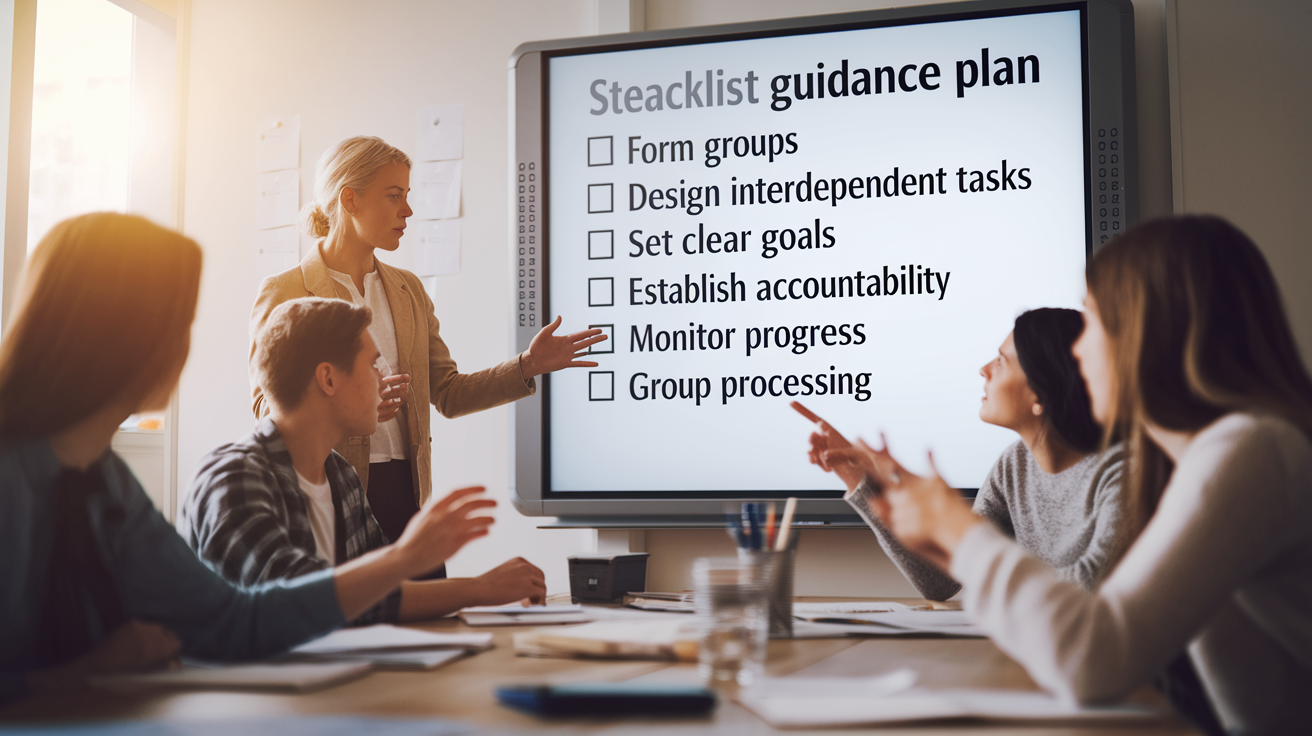
You can’t just throw students into groups and hope it works. You need a plan.
Form heterogeneous groups. Mix achievement levels, gender, backgrounds, learning styles. Keep groups at three or four students. Bigger groups let people check out. Keep the same groups for several weeks (six to eight typically) so they build trust and habits.
Design interdependent tasks. Structure the work so nobody can finish alone. Give each person a different role (recorder, materials manager, timekeeper, reporter) or give each student unique info the group needs.
Set clear group goals. Define what success looks like. Maybe it’s hitting a target team average on a quiz, producing one quality product with signed sections, or hitting all checkpoints on time with proof everyone contributed.
Teach collaboration skills explicitly. Model and practice active listening, constructive feedback, respectful disagreement, asking clarifying questions. Use role play or short practice tasks before launching bigger projects.
Establish accountability mechanisms. Individual quizzes after group study, random reporter selection, peer evaluations, signed contributions. Make sure everyone stays responsible.
Monitor and intervene strategically. Walk around during group work, ask groups to explain their process, check both task progress and group dynamics. Don’t immediately solve their problems. Ask guiding questions that push them to figure it out.
Build in group processing time. Give regular reflection moments for groups to discuss what’s working and what’s not. Simple prompts work: “What helped us today?” and “What can we improve next time?”
Research Supported Academic and Social Outcomes

When cooperative learning gets done right, with those five core principles in place, students show real gains. Gillies (2016) pulled together research showing cooperative methods produce higher achievement, better retention, and more motivation compared to competitive or solo work.
A PLOS One study (Theobald et al., 2017) tracked university students and found those who felt comfortable and psychologically safe in their groups showed a 27 percent increase in content mastery over peers who didn’t feel that comfort. Beyond test scores, cooperative learning builds skills students need outside class. Collaboration, communication, handling conflict, creative problem solving.
Specific outcomes backed by research:
Increased academic achievement. Students learn more and remember longer when they explain concepts to peers and get peer feedback.
Greater willingness to participate and take risks. Small groups reduce fear of public failure and encourage trying hard problems and sharing unfinished ideas.
Improved social emotional competencies. Students develop empathy, perspective taking, emotional regulation, resilience through structured peer interaction.
Reduced teacher dependency. Students learn to rely on each other for support and feedback, freeing you to give targeted help where it’s most needed.
Common Obstacles and How Educators Can Address Them

Uneven contributions are a constant problem. Some students take over while others check out or coast. This happens when tasks let one capable student do everything alone or when there’s no accountability. Fix it by designing tasks that genuinely need multiple perspectives, assigning rotating roles with clear jobs, and using frequent individual checks like random reporters or individual quizzes tied to group study.
Off task behavior usually means the task is too vague, too easy, too hard, or boring. Break big projects into smaller checkpoints with regular reviews and point values. Use timers for focused work bursts. Look at your task design again. If students consistently drift, increase relevance or adjust difficulty to match where they actually are.
Interpersonal conflict can wreck groups, especially if personality clashes or unresolved stuff goes unaddressed. Spend time upfront on team building activities that help students learn about each other in low stakes ways. Use surveys or informal check ins to spot pairing problems before assigning groups. Build daily or weekly reflection prompts into the routine so conflicts surface early. When you need to, coach students through conflict resolution talks or rearrange groups. But push students to co design solutions whenever possible.
Assessing Individual and Group Performance

Assessment in cooperative settings has to balance group success with individual mastery. Use a mix of tools. Individual quizzes or tests after group study sessions make sure every student learned the material, not just copied answers. Ask students to sign or color code their contributions on group products so you can see who did what. Peer evaluations and self assessments add student voice and push accountability within the group.
Rubrics give transparent criteria for both process and product. Share rubrics before the task starts, practice scoring sample work as a class, use the same rubric to evaluate discussion quality, collaboration skills, and final deliverables. Reflection logs or group processing sheets capture how well teams are working together and flag areas for growth.
| Assessment Method | Purpose |
|---|---|
| Individual quizzes or tests | Verify that each student has mastered the content, not just the group as a whole |
| Peer evaluations and self assessments | Encourage honest feedback on contributions and hold students accountable to teammates |
| Rubrics for collaboration and content | Provide clear, shared criteria for quality work and productive teamwork |
| Signed or color coded contributions | Make individual accountability visible on group products |
Distinguishing This Method from Collaborative Learning
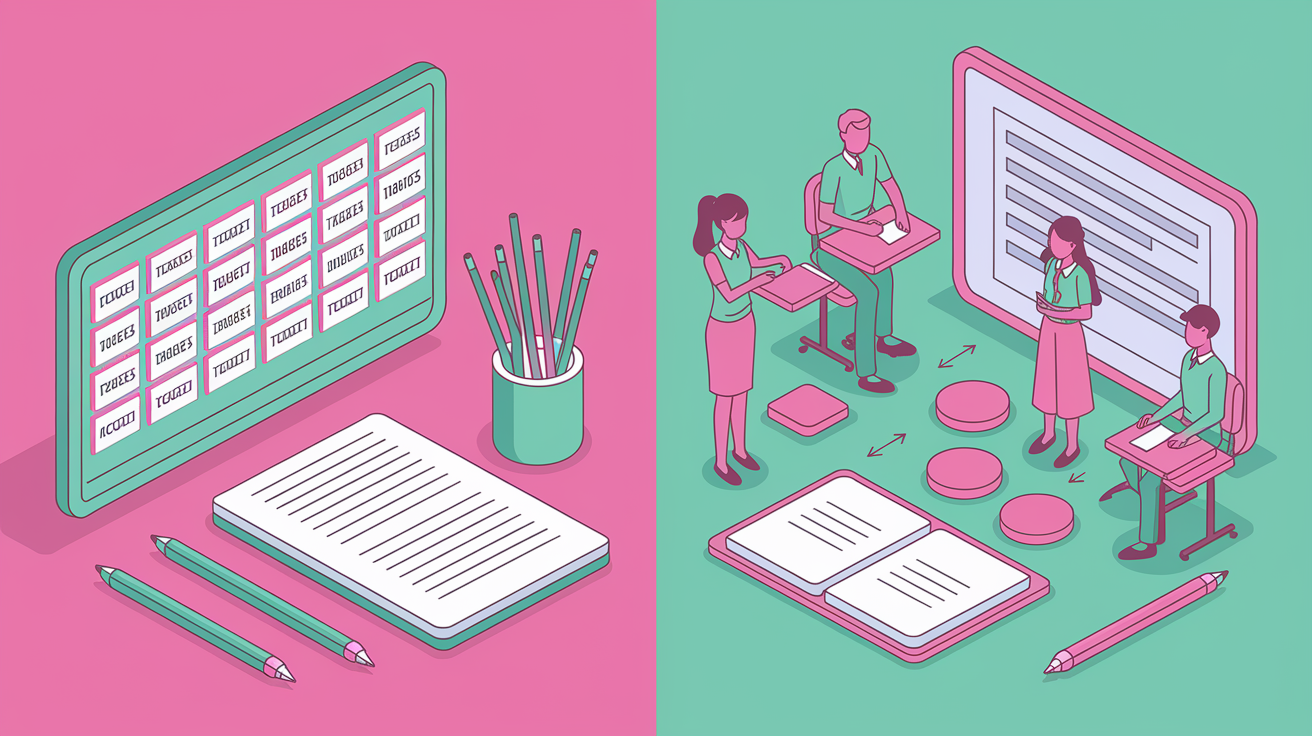
Cooperative learning and collaborative learning both involve students working together, but they’re different in structure, teacher role, and how much guidance you give. Cooperative learning uses tightly structured, teacher designed tasks with explicit roles, accountability tools, and predetermined objectives. The teacher plans interdependence into the task from the start and monitors closely to make sure every student contributes and learns.
Collaborative learning is more open ended and student directed. Students negotiate roles, set their own goals, decide how to divide or share work. The teacher acts as a facilitator instead of an architect, stepping in less and giving groups more freedom to organize themselves and solve problems.
Key differences:
Structure. Cooperative tasks are highly structured with clear roles and accountability. Collaborative tasks are flexible and student managed.
Teacher role. In cooperative settings, teachers design interdependence and monitor compliance with group norms. In collaborative settings, teachers step back and coach only when groups ask for help.
Accountability. Cooperative methods require formal individual checks and group processing routines. Collaborative approaches rely more on intrinsic motivation and peer accountability negotiated within the group.
Real World Classroom Scenarios and Sample Activities

In a third grade reading classroom, the teacher uses partner think pair share during a character development unit. Students individually read a chapter, jot down predictions about the main character’s next decision, then pair with a partner to compare predictions and cite evidence from the text. Pairs share their best supported prediction with the class. This quick cycle makes sure every student reads actively, practices using textual evidence, and hears multiple interpretations before the whole class discussion.
A seventh grade science teacher runs a jigsaw on dinosaur extinction theories. The class splits into home groups of four, and each student gets assigned one theory: asteroid impact, volcanic activity, climate change, or disease. Students regroup into expert teams with classmates studying the same theory, research together, prepare teaching materials. Experts return to home groups and teach their theory. Then each home group evaluates all theories and defends a conclusion in writing. Every student has to teach and has to learn from peers. True interdependence. Nobody can opt out.
In an eleventh grade history class, students run a political campaign simulation over three weeks. Each four member team represents a candidate and has to produce campaign posters, editorial cartoons, debate talking points, a short video ad, and a stump speech. Roles rotate weekly. One week you’re the creative director, next week the research lead, then the media producer. Teams present their campaigns to the class, and students score presentations using a shared rubric. The rotation makes sure every student practices multiple skills, and the interdependent deliverables mean one weak link hurts the entire campaign’s credibility.
Final Words
We jumped right in: we defined the method, explained its core principles, and showed why intentional structure matters for real group learning.
Then we mapped practical strategies, gave step‑by‑step classroom moves, covered assessment approaches, and compared this method to more open collaborative styles. We also flagged common problems and fixes you can use today.
Try one small activity and watch how cooperative learning changes participation and understanding. It’s practical, testable, and worth the effort.
FAQ
Q: What is the meaning of cooperative learning?
A: The meaning of cooperative learning is an instructional approach where students work in small, structured groups to achieve shared goals, using teacher-designed tasks that promote interaction, mutual support, and shared responsibility.
Q: What are the 5 principles/elements of cooperative learning?
A: The five principles (or elements) of cooperative learning are positive interdependence, individual accountability, promotive interaction (students helping each other), development of social skills, and regular group processing to improve teamwork and results.
Q: What is an example of cooperative learning?
A: An example of cooperative learning is the jigsaw activity, where each student studies one topic piece, teaches it to their small group, and the group combines knowledge to complete a shared task.