
Controversial: the best workplace training happens when the instructor talks less and the group figures things out together. A learning facilitator does exactly that, they design experiences that get adults to explore, collaborate, and apply skills instead of just memorizing facts. In this post you’ll learn what facilitators actually do, the core skills to build, and clear certification routes to get hired or level up. Read on if you want to turn training into real behavior change and follow a practical path to becoming a facilitator who makes learning stick.
Understanding the Role of a Learning Facilitator

A learning facilitator guides people through educational experiences by setting up environments where they can discover things, work together, and actually use what they’re learning. They don’t stand at the front delivering content like traditional instructors do. Instead, they design processes that get people thinking critically, participating actively, and learning from each other. The whole point is supporting learner autonomy, not directing every step.
This matters more now because organizations have figured out that adults learn best when they build meaning through their own experiences and reflection. Facilitators help connect new ideas to what someone already knows. They guide people through challenges using discovery rather than answers. And they make sure skills actually transfer to real situations outside the learning room.
The shift away from lecture-based training isn’t random. It reflects a better understanding of how people actually retain and apply what they learn. Traditional teaching methods often fail to engage adult learners or produce any real behavior change. Facilitators can adapt to what a group needs in the moment, handle different learning styles, and create spaces where it’s safe to experiment and even fail.
Organizations hire learning facilitators for four reasons:
- Getting learners more engaged and taking ownership of their own process
- Building critical thinking and problem solving that people can actually use at work
- Creating collaboration and knowledge sharing within teams
- Measuring impact through real behavior change, not just test scores
Core Responsibilities of a Learning Facilitator
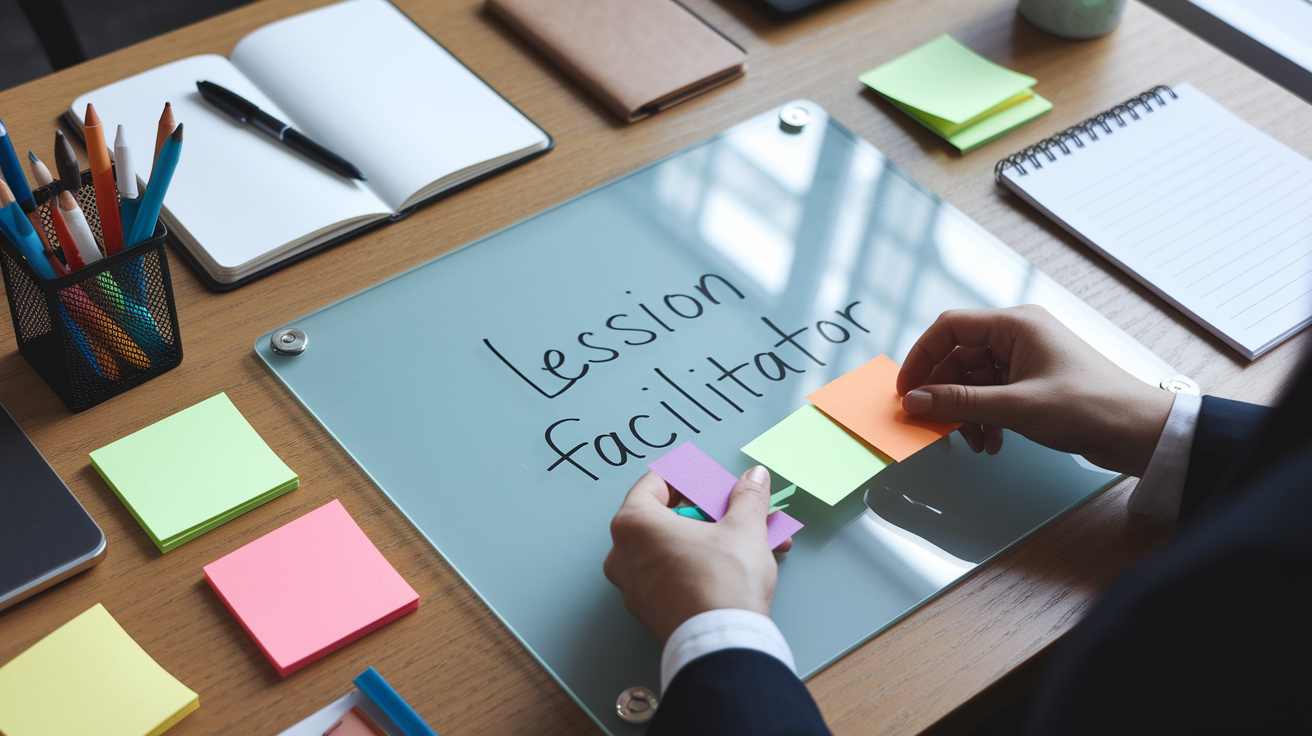
A facilitator’s work starts way before anyone walks into the room. They’re designing session flows, picking activities that match what people need to learn, getting materials ready, and thinking through how different groups might respond. During sessions, they guide discussions, ask questions that push understanding deeper, watch group dynamics, and change pacing based on energy and how well people are getting it. After, they check whether learners actually achieved what they were supposed to, collect feedback, and adjust future sessions based on what worked or bombed.
The specifics vary a lot depending on context. A corporate facilitator might run a three day leadership workshop for 20 managers. A community education facilitator might guide eight adults through six weeks of digital literacy. But the core workflow stays consistent. Design for outcomes. Create space for learner driven discovery. Measure whether the experience produced the change you wanted.
Six primary responsibilities:
- Planning experiences with clear outcomes, the right activities, and realistic timing
- Guiding group work and discussions to keep focus while letting people explore
- Moderating conversations so all voices get heard and ideas get examined properly
- Checking engagement through observation, questions, and ongoing feedback
- Adapting content and delivery in real time based on group energy, confusion, or unexpected insights
- Evaluating impact using evidence like behavior change, skill application, and what participants reflect on
Facilitator vs. Teacher: Key Differences

The big difference is who controls the learning. Teachers set the agenda, deliver information in a planned order, and check whether students absorbed it correctly. Facilitators design frameworks where learners explore, question, and build understanding together.
A teacher might explain conflict resolution steps and then quiz students on the model. A facilitator would present a realistic conflict scenario, guide learners through analyzing it, and help the group discover resolution strategies through structured discussion.
This changes the relationship completely. Teachers position themselves as content experts transferring knowledge. Facilitators position themselves as process experts helping learners access their own insights and build on each other’s experiences. A teacher’s expertise is knowing the subject deeply. A facilitator’s expertise is reading the room, asking the right question at the right moment, and knowing when to step back.
Learning outcomes differ too. Traditional teaching measures success through recall and correct answers. Facilitation measures success through applied skills, changed behaviors, and the ability to transfer learning to new situations. When a teacher succeeds, students can repeat information back. When a facilitator succeeds, learners can solve problems they’ve never seen before.
Key comparison:
- Teachers deliver structured content, facilitators guide learner driven exploration
- Teachers check knowledge recall, facilitators check skill application and transfer
- Teachers follow planned instruction, facilitators adapt based on group needs
Essential Skills and Competencies

You need a mix of interpersonal, analytical, and design skills that go way beyond just knowing your subject. Communication tops the list because you’ve got to explain complex ideas simply, give clear instructions for activities, and summarize group discussions so everyone stays oriented. Active listening comes next. You’re constantly reading verbal and nonverbal cues to understand when learners are confused, checked out, or ready to go deeper. Without these two foundation skills, even the best session design falls apart.
The other competencies support real time decision making and group management. You’ll encounter resistance, off topic tangents, people who dominate conversations, and people who won’t speak up in nearly every session. Managing all that without killing the learning requires both confidence and humility. You also need to think on your feet. Plans change when an activity finishes early, when a key concept needs more time, or when tech glitches force a complete pivot.
Seven core competencies every learning facilitator should develop:
- Clear communication and explaining ideas using plain language and concrete examples
- Active listening to catch confusion, resistance, and insights emerging from participants
- Problem solving to handle unexpected challenges during sessions without losing momentum
- Conflict resolution to work through disagreements and turn tension into productive dialogue
- Group management to balance participation, keep focus, and create psychological safety
- Adaptability to shift methods, pacing, or content based on real time assessment of learner needs
- Empathy to understand diverse perspectives, learning preferences, and emotional responses to content
Common Facilitation Methods and Techniques
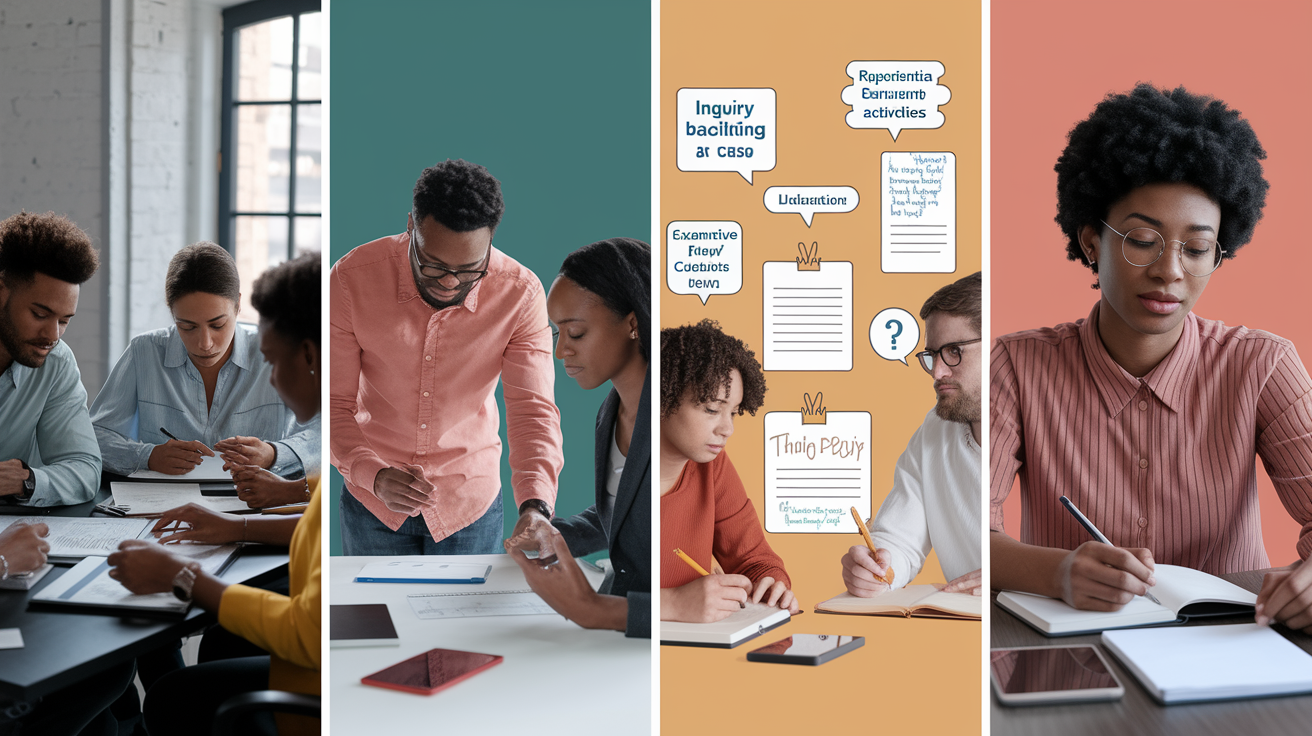
You choose methods based on learning goals, group size, time available, and participant experience. The best facilitators build a toolkit of approaches and know which technique fits each situation. What works beautifully for a group of eight might collapse with forty participants. A technique that energizes early career professionals might feel patronizing to senior leaders. Matching method to context is where this becomes both art and science.
Collaborative Learning
Collaborative learning structures tasks so participants have to work together to reach a shared goal. You might divide a twenty person cohort into small groups of four, give each group a case study with missing information, and require groups to share findings to complete the full picture. This works well when the learning involves synthesis, perspective taking, or building on diverse expertise. Your job is designing the task with the right challenge level, setting clear time boundaries, and debriefing the experience so learners articulate what they discovered together.
Inquiry-Based Facilitation
Inquiry based facilitation starts with questions, not answers. Instead of explaining a concept, you pose a driving question and guide learners through investigating it. Rather than presenting five steps of effective feedback, you might ask, “What makes feedback land well versus get ignored?” and use participant stories and patterns to build a model together. This increases retention because learners construct understanding through their own reasoning. You curate the inquiry by asking follow up questions, highlighting useful patterns, and connecting ideas without giving the final answer.
Experiential Activities
Experiential activities immerse learners in realistic scenarios where they apply skills and reflect on outcomes. Role plays, simulations, and hands on tasks all fit here. Teaching negotiation skills? Run a thirty minute simulation where pairs negotiate a contract with conflicting interests, then lead a structured debrief examining what strategies worked and why. These work best when the experience closely mirrors real challenges learners face. Your job is briefing the activity clearly, observing without interfering, and facilitating reflection that pulls learning from the experience.
Reflective Practices
Reflective practices ask learners to pause, examine their thinking, and articulate what they’re learning. Simple techniques include think pair share, where individuals reflect silently, discuss with a partner, then share insights with the larger group. Or journaling prompts that help learners connect session content to their own context. Reflection turns experience into learning by making thinking visible. Use reflection at transition points. After an activity. At the midpoint of a session. As a closing ritual. The key is giving enough time for genuine thought rather than rushing to the next topic.
Training and Certification Pathways
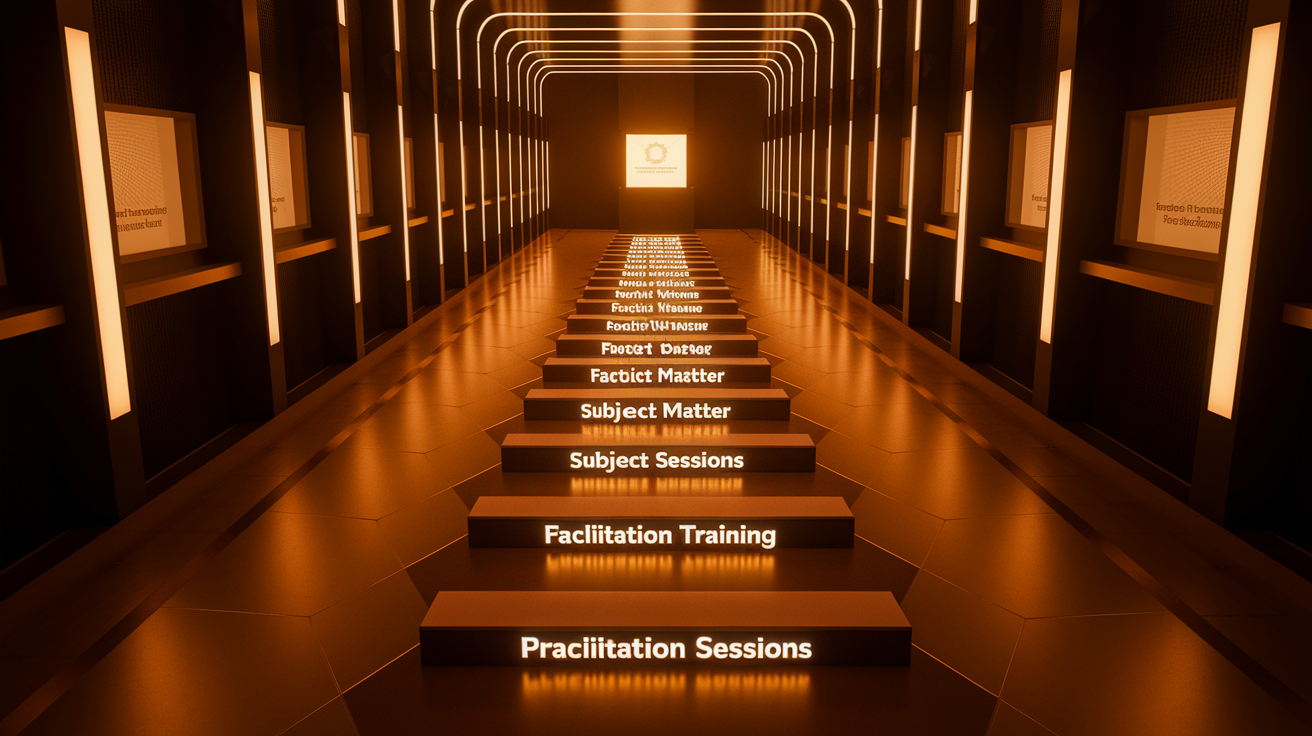
You can enter this field through multiple routes. Many people start by gaining subject matter expertise in something like project management, leadership development, or technical skills, then layer on facilitation training to shift from expert to guide. Others come from teaching or training backgrounds and pursue facilitation credentials to expand their toolkit. Formal training ranges from short workshops introducing core techniques to extended certificate programs with supervised practice, feedback, and portfolio development.
Certification programs vary in rigor and focus. Corporate facilitation credentials often emphasize business training contexts, group decision making, and meeting facilitation. Adult learning certificates center on andragogy, the principles of adult education, and typically cover learning design, motivation, and assessment. Professional development programs for K through 12 educators focus on instructional coaching and professional learning community facilitation. Most credible programs require you to demonstrate facilitation skills through observed sessions, portfolio submissions, or recorded examples assessed against competency standards.
The path typically includes completing a structured training course lasting one to twelve weeks, facilitating practice sessions with peer feedback, and earning a credential or certification that signals competence to employers or clients. Some programs also require ongoing professional development to maintain certification, keeping facilitators current with emerging methods and evidence based practices. While no single certification is universally required, credentials from recognized professional bodies increase credibility and provide access to facilitator networks and referral opportunities.
Salary and Career Outlook

Learning facilitator salaries vary widely based on industry, experience, and whether you’re an employee or freelance. Corporate facilitators who design and deliver leadership development or compliance training generally earn more than those working in nonprofit or community education settings. Geographic location plays a big role too. Facilitators in major metro areas command higher pay than those in smaller markets. Entry level facilitators often start in trainer or coordinator roles, gaining experience before moving into senior facilitator or learning design positions.
Demand for skilled facilitators keeps growing as organizations invest in upskilling employees, building leadership pipelines, and creating cultures of continuous learning. The shift to hybrid and remote work increased demand for facilitators skilled in virtual and blended delivery. Higher education, corporate learning and development teams, and consulting firms all hire facilitators regularly. Freelance facilitators can build sustainable practices by specializing in a niche like equity facilitation, technical training, or executive coaching and marketing through professional networks and referrals.
| Industry | Typical Salary Range |
|---|---|
| Corporate Training & L&D | $55,000–$100,000 |
| K-12 & Higher Education | $45,000–$80,000 |
| Nonprofit & Community Education | $40,000–$65,000 |
Examples Across Different Learning Environments

Facilitators adapt their approach to fit the needs and norms of each environment. In corporate settings, you might lead a two day intensive workshop for fifteen mid level managers, focusing on change leadership and strategic thinking. Sessions mix small group case analysis, role play scenarios, and action planning exercises that participants take back to their teams. You’re balancing keeping to the agenda with allowing time for real challenges managers are facing, creating space for peer problem solving that often proves more valuable than the planned content.
In higher education, a facilitator supports faculty development by leading semester long learning communities where eight to twelve professors explore new teaching methods together. Each ninety minute session includes a brief input on evidence based practice, followed by structured peer observation and feedback cycles. Your role is maintaining psychological safety, guiding reflection on teaching videos, and helping faculty design low stakes experiments they can try in their own classrooms. This relies on your ability to honor faculty expertise while introducing new frameworks gently.
Adult learning and community education contexts often involve shorter engagement cycles and more diverse participant backgrounds. You might guide a six week digital literacy course for twenty community members ranging from age twenty five to seventy, meeting two hours each week. Activities emphasize hands on practice, peer teaching, and real world application. Setting up email. Evaluating online information. Using video calls. You’re continuously checking for understanding, adapting pacing based on the group’s comfort with technology, and celebrating small wins to build confidence.
Three more examples:
- A learning facilitator in a healthcare system leads monthly case review sessions for nurses, using a structured protocol to analyze patient safety incidents and identify systems improvements without blame
- A freelance facilitator guides a nonprofit board through annual strategic planning, using visual mapping and scenario planning to help trustees align on priorities and resource allocation
- An internal facilitator at a tech company runs onboarding cohorts for new engineers, blending technical knowledge transfer with team building activities and mentorship matching over a three week period
Final Words
You saw facilitators guiding activities, planning experiences, and helping learners take charge.
The post covered what a learning facilitator is, core responsibilities, how the role differs from a teacher, essential skills, common methods, training routes, salary hints, and examples across settings.
Use the quick lists and techniques to plan practice sessions, get feedback, and build confidence.
If you’re stepping into the position or supporting one, a learning facilitator makes learning more active and learner-centered. Keep trying. Small wins add up.
FAQ
Q: What is the role of a learning facilitator?
A: The role of a learning facilitator is to guide learning experiences, support skill development, and foster collaboration so learners discover, practice, and apply knowledge instead of receiving direct instruction.
Q: What is the difference between a teacher and a learning facilitator?
A: The difference between a teacher and a learning facilitator is that a teacher directs instruction and covers curriculum, while a facilitator shapes collaborative environments that boost learner autonomy, critical thinking, and discovery.
Q: How much do learning facilitators make?
A: Learning facilitators make varying salaries depending on industry and experience; typical U.S. annual ranges are about $45,000–$80,000, with corporate training roles often paying more.
Q: How much do facilitators get paid per hour?
A: Facilitators get paid per hour at widely varying rates; typical U.S. entry or freelancer rates are $20–$60/hr, while experienced corporate or consultant facilitators may command $75–$200/hr.