
What if serving your neighborhood could actually raise your grades?
Service learning is that idea in action: students solve real community problems while tying the work directly to class goals and guided reflection.
It’s not volunteering with no follow-up; it’s structured learning that asks students to research, act, and then think about what they learned.
When projects have clear objectives, regular reflection, and real community partners, community impact and academic growth rise together.
What Service Learning Really Is
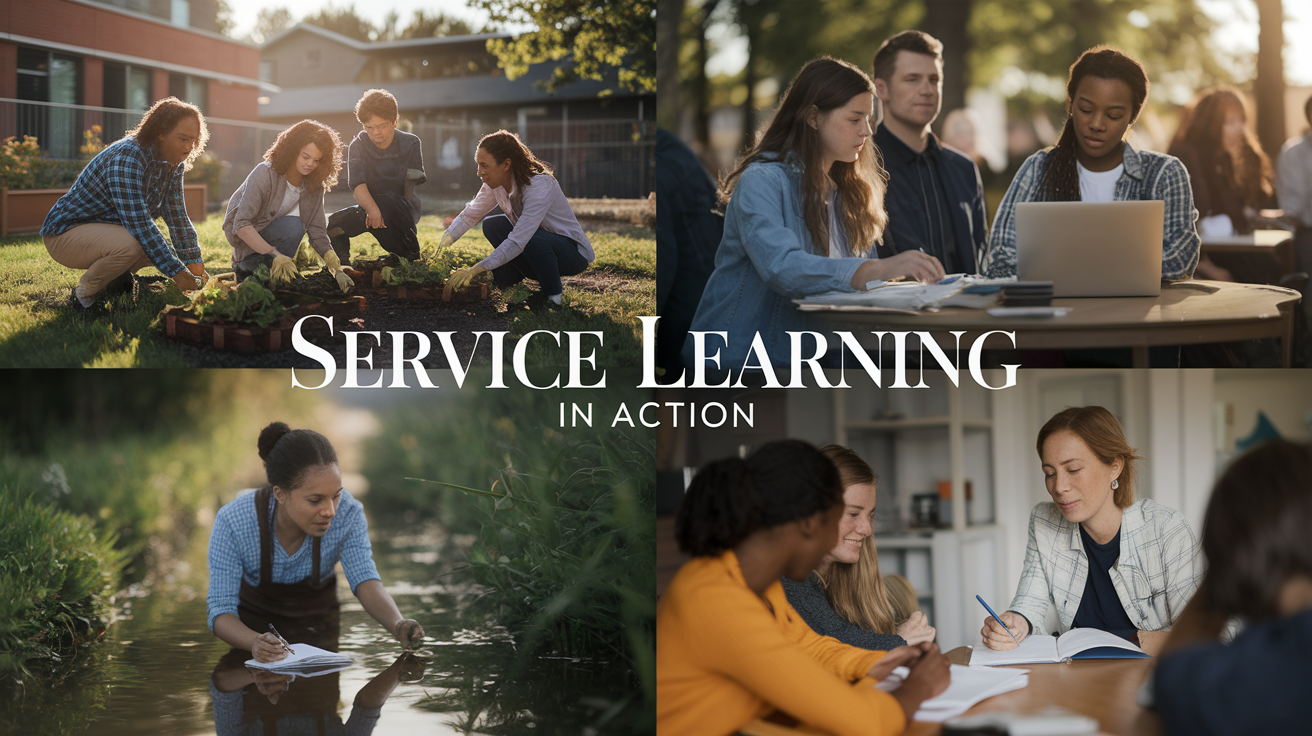
Service learning is experiential education where learning happens through action and reflection, aimed at real community needs while building student skills. It sits where classroom theory meets hands-on work and structured thinking about both.
The cycle works like this: students spot a real need in their community, link it to what they’re studying, take action to address that need, then reflect on what they learned about the topic and themselves. That reflection part separates service learning from volunteering. It’s not just doing good work, it’s thinking hard about why the work matters and what it teaches you.
Here’s an example. A fifth-grade class studies water scarcity in science. They research local drought conditions, create infographics with water usage data, then launch a school-wide awareness campaign using posters and a simple website. Afterward, they write about what surprised them and how their own water habits changed. The science content (watersheds, conservation, data analysis) gets stronger because it’s tied to real stakes and real people.
Service learning combines three core components that must all show up:
Explicit learning objectives tied to curriculum standards. Students aren’t just helping, they’re meeting grade-level goals in literacy, math, science, or social studies through the project.
Structured reflection activities like journaling, discussion prompts, presentations, or art that ask students to process what they learned about the content and their role in the community.
Reciprocal community partnerships where the community partner benefits from the students’ work, and students gain authentic context, mentorship, or resources they couldn’t get in a classroom alone.
The partnership piece matters. A reciprocal relationship means both sides give and both sides gain. If students only show up to “help” without learning from the community or if the project ignores what the community actually needs, it’s not true service learning.
One more component that gets overlooked: assessment. Service learning isn’t a break from rigor. Students get evaluated on content mastery (Can you explain the water cycle? Can you graph usage data?), skill development (research, writing, speaking), and reflective growth (How did this change your thinking?). Assessment can come from three groups: the teacher, the community partner, and the students themselves. When all three help develop a rubric, the learning becomes more visible and more owned.
How Service Learning Differs from Volunteering

Volunteering and service learning both involve students helping their community, but the structure, goals, and outcomes are different.
Volunteering typically means showing up to do a task. Serving meals, cleaning a park, sorting donations. The focus is on the community benefit. Students contribute time and effort, and that work has value. But volunteering doesn’t always tie to what students are learning in class, and it rarely includes formal reflection or assessment. It’s action without the academic scaffolding.
Service learning wraps that action in curriculum. It starts with a learning goal. Students will research local homelessness, analyze census data, and write persuasive letters to city council. The service component (packing care bags, delivering them to a shelter) becomes the context for that learning. The reflection afterward asks: What did the data show? How did meeting shelter staff change your assumptions? What would you do differently next time?
The distinction becomes clearer with a side-by-side:
| Volunteering | Service Learning |
|---|---|
| Students spend Saturday morning at a food bank sorting cans. | Students research food insecurity rates in their ZIP code, create a presentation for the school board, organize a canned-food drive, then write reflection essays analyzing why local hunger exists and what policies could help. |
| No formal tie to coursework; optional or extra-curricular. | Integrated into social studies, English, or math class; assessed with a rubric. |
| Community benefits; students feel good. | Community benefits; students meet curriculum standards, develop civic skills, and deepen content understanding. |
A few other differences:
Credit and requirements. Service learning often counts toward course credit or graduation requirements because it’s academically integrated. Volunteering may count toward service hours, but it’s typically separate from coursework.
Reflection and assessment. Service learning includes structured reflection prompts and graded work (journals, presentations, portfolios). Volunteering might include a thank-you card or a debrief, but it’s not formally evaluated.
Reciprocity and partnership. Service learning projects are designed with community partners, not for them. The partner helps shape the learning goals, provides feedback, and sometimes co-assesses student work. Volunteering is more often one-directional: students show up, the organization assigns tasks, students leave.
Both volunteering and service learning build empathy and civic responsibility. But service learning also builds literacy, research skills, critical thinking, and content mastery. It’s not “volunteering lite.” It’s a teaching method that uses community work as the vehicle for deeper academic learning.
If a student walks away from a project and can answer, “What did I learn about the topic? What did I learn about myself? How will I use this knowledge?” then it’s service learning. If they only remember feeling helpful, it was probably volunteering.
What Service Learning Looks Like in Practice
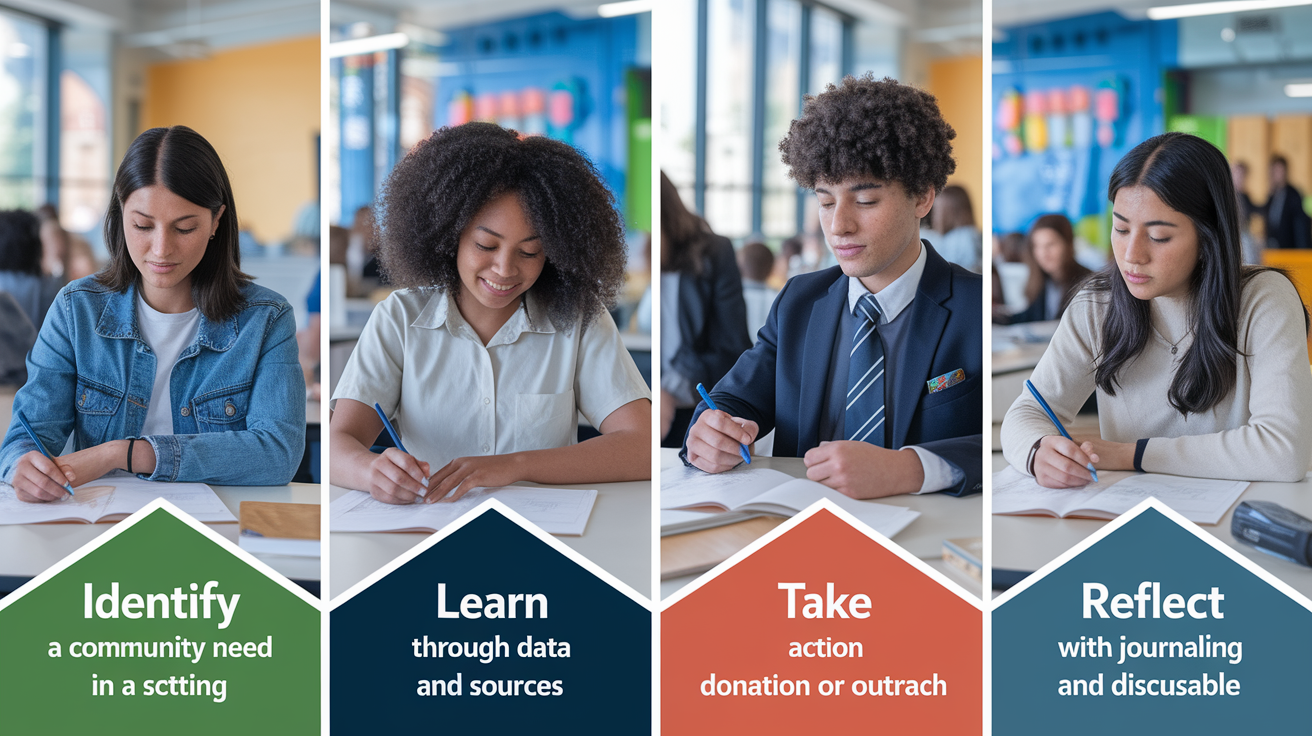
Service learning projects vary widely by grade level, subject area, and community context, but they all share a structure: students identify a need, learn about it, take action, and reflect.
Here’s what that cycle looks like in a classroom.
A third-grade class studying animal habitats partners with a local humane society. Students research why animals end up in shelters, read books like Can I Be Your Dog? by Troy Cummings, then organize a donation drive for pet food and toys. They visit the shelter, meet staff, and ask questions about animal care. Afterward, they create thank-you posters and write journal entries about what surprised them and how their view of pets changed.
A high school environmental science class investigates water quality in a nearby creek. Students collect samples, test pH and pollutant levels, graph the data, and research local stormwater policies. They present findings to the city council and create an infographic campaign for social media. The reflection asks: What did you learn about ecosystems? About advocacy? About your own role in environmental health?
A middle school ELA class reads Fish in a Tree by Lynda Mullaly Hunt, a novel about a student with dyslexia. Students research learning differences, interview the school’s special education staff, then design and host a “celebrate diversity” day with inclusive games, art stations, and guest speakers. They write reflective essays on empathy and the power of understanding differences.
Those examples show the range, but every project follows a similar four-part structure:
Pre-Reflection. Students brainstorm local or global issues that matter to them. They read current-events articles (sources like Newsela work well for leveled news), discuss problems they see in their community, and vote on a focus area. This stage front-loads the learning. If students pick hunger, they first learn about food deserts, nutrition, and local food-bank systems. The service makes sense because they understand the why.
Research. Students dig into the issue using guided research skills. They might conduct online polls, analyze census data, interview community members, or create multimedia summaries. Tools like Piktochart (for infographics) and Weebly (for simple websites) help them organize and present findings. The research phase teaches information literacy, data visualization, and critical thinking, all tied to the service goal.
Presentation. Students share what they learned and take action. They might create posters for the school hallway, launch a letter-writing campaign to local officials, build a simple website with resources, record a screencast explaining the issue, or visit a community organization to present recommendations. The presentation is both the service (raising awareness, advocating for change) and the academic product (public speaking, persuasive writing, digital literacy).
Reflection. After the action, students process the experience with guided prompts:
What did you learn about the topic that surprised you?
What did you learn about yourself?
How do you think differently now?
What would you do differently next time?
Reflection can take many forms. Journal entries, group discussions, poems, visual art, blog posts, or video essays. The key is making thinking visible. A sixth-grader might write, “I used to think homelessness was about lazy people. Now I know it’s about systems (rent, wages, mental health support) and I want to learn more about policy.”
Service learning also looks different depending on the type of project:
Direct service. Students work face-to-face with people or animals. Tutoring younger students, visiting a nursing home to record oral histories, walking dogs at a shelter, or serving meals at a food bank.
Indirect service. Students work behind the scenes to support an organization. Organizing a fundraiser, stocking a food pantry, planting trees in a park, or collecting donations for a resale shop.
Advocacy. Students work to change policy or raise awareness. Writing letters to elected officials, creating public-awareness campaigns, organizing a school assembly on climate action, or partnering with a nonprofit to educate the community about a local issue.
The common thread: students do real work that meets a real need, and the work is designed to deepen academic learning. A Habitat for Humanity build isn’t just swinging hammers. It’s calculating area and perimeter, researching affordable housing policy, and writing about economic inequality. Packing food bags isn’t just filling boxes. It’s analyzing nutrition labels, mapping food deserts, and presenting data on hunger rates.
Service learning works across all grade levels. K–2 students might read Uncle Willie and the Soup Kitchen by DyAnne DiSalvo-Ryan, then create care packages with simple drawings and notes. High school seniors might design a semester-long independent-study project, partnering with a refugee resettlement agency to teach digital literacy skills and reflect on global migration policy. The complexity scales, but the structure stays the same: learn, act, reflect, share.
Six Ready-to-Use Service Learning Project Ideas
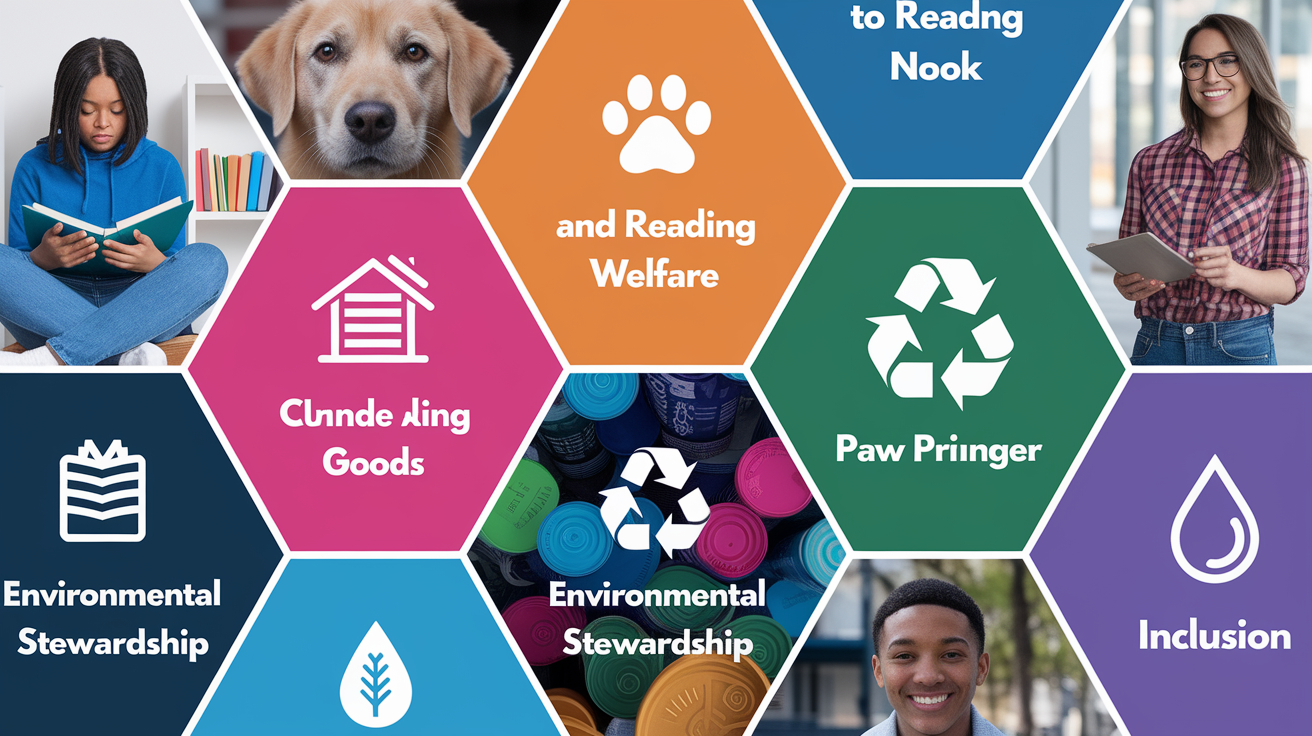
These six projects are classroom-tested, adaptable across grade levels, and designed to connect academic standards with hands-on community work.
1. Literacy and Access to Books
The need: Many low-income schools and community centers don’t have enough books for students to take home.
The action: Students collect gently used books, organize a book drive, and deliver them to a local elementary school, library, or after-school program. Older students can also volunteer as reading buddies, tutoring younger kids one-on-one.
The learning: Students read and discuss books like Read Me a Book by Barbara Reid or The Library Card by Jerry Spinelli. They research literacy rates in their community, write persuasive letters to families asking for book donations, and create promotional posters. Math tie-in: graph the number of books collected by genre or reading level. Reflection: What role do books play in your life? How does access to books shape a student’s future?
2. Animal Welfare and Humane Education
The need: Local animal shelters need donations, volunteers, and community awareness to reduce the number of animals without homes.
The action: Students collect pet food, toys, blankets, and cleaning supplies. They visit the shelter to meet staff, learn about animal care, and ask questions about adoption and spay/neuter programs. Some classes create social-media posts or flyers to promote adoptable pets.
The learning: Read Can I Be Your Dog? by Troy Cummings or Saving Winslow by Sharon Creech. Research why animals end up in shelters, what “no-kill” means, and how fostering works. Science tie-in: study animal needs (food, shelter, socialization) and compare domestic and wild species. Reflection: How did meeting shelter staff change your understanding of animal welfare? What responsibility do humans have toward animals?
3. Poverty, Hunger, and Food Insecurity
The need: Families in the community face food insecurity, and local food banks depend on donations and volunteer labor.
The action: Students organize a canned-food drive, pack care bags with non-perishable meals, or partner with a food pantry to sort and stock shelves. Some classes prepare and serve meals at a soup kitchen.
The learning: Read Uncle Willie and the Soup Kitchen by DyAnne DiSalvo-Ryan or Maddi’s Fridge by Lois Brandt. Research food deserts, SNAP benefits, and local hunger statistics. Social studies tie-in: map where food banks are located and identify underserved neighborhoods. Math tie-in: analyze nutrition labels and calculate the cost of a week’s groceries. Reflection: What surprised you about hunger in your community? How can individuals and systems address food insecurity?
4. Environmental Stewardship and Waste Reduction
The need: Schools and communities produce a lot of waste, and many recyclable items end up in landfills.
The action: Students audit the school’s recycling system, create bins for each classroom, design and hang educational posters, or organize a schoolwide cleanup day at a local park or beach. Some classes start composting programs or plant trees in the community.
The learning: Read The Wartville Wizard by Don Madden or Me and Marvin Gardens by A. S. King. Research how landfills work, what materials are recyclable in your area, and the impact of single-use plastics. Science tie-in: study ecosystems, pollution, and climate change. Math tie-in: weigh trash collected during a cleanup and graph results by material type. Reflection: How did this project change your daily habits? What can one person do, and when do we need policy change?
5. Drought and Water Awareness
The need: Many regions face water scarcity, and communities need education on conservation and sustainable water use.
The action: Students research local water sources, usage data, and conservation strategies. They create infographics, posters, or short videos explaining the issue and post them around school or share them on social media. Some classes partner with a water district to promote lawn-reduction programs or rainwater collection.
The learning: Study the water cycle, aquifers, and drought conditions in your state. Analyze graphs showing reservoir levels or per-capita water use. Social studies tie-in: research water policy, agriculture’s role in water use, and global access to clean water. ELA tie-in: write public-service announcements or persuasive op-eds for the local paper. Reflection: How does your family use water? What changes can you make? What role should government play in managing water?
6. Diversity, Inclusion, and Intergenerational Connection
The need: Many senior citizens experience isolation, and students benefit from hearing life stories and perspectives different from their own.
The action: Students create a “pen pal” video-conferencing program with a local senior center or assisted-living facility. They prepare questions, record conversations, and create digital scrapbooks or oral-history presentations. Some classes host a “celebrate diversity” day at school with inclusive activities, guest speakers, and art stations that highlight different cultures and abilities.
The learning: Read All Are Welcome by Alexandra Penfold or Fish in a Tree by Lynda Mullaly Hunt. Research aging, intergenerational programs, and the importance of inclusion. Social studies tie-in: interview seniors about historical events they lived through and compare their experiences to textbook accounts. ELA tie-in: transcribe interviews, write biographical sketches, or create podcasts. Reflection: What did you learn from someone with a different background or life experience? How can we build more inclusive communities?
Each of these projects can be scaled up or down depending on grade level. A second-grader might draw pictures for care packages and write one-sentence reflections. A high school junior might design a full multimedia campaign, analyze policy, and write a research paper. The core stays the same: identify a need, connect it to curriculum, take action, and reflect on what changed in your understanding.
How to Assess Service Learning (Teacher, Student, and Community Partner Roles)

Assessment in service learning isn’t just a teacher with a rubric. It’s a three-way process where the teacher, the student, and the community partner all evaluate different pieces of the learning.
Teacher assessment focuses on content mastery and academic skills. Did students meet the curriculum standards? Can they explain the water cycle, graph data accurately, write a clear persuasive letter, or deliver a well-organized presentation? The teacher grades traditional products (research papers, infographics, speeches, reflection essays) using rubrics tied to grade-level expectations.
Example: A teacher assessing a food-insecurity project checks whether students correctly analyzed census data (math standard), cited sources in their research (literacy standard), and used transitions in their reflective writing (composition standard). The rubric might include criteria like “Uses evidence to support claims” or “Explains how the project changed personal perspective.”
Student self-assessment asks learners to evaluate their own growth. This happens through guided reflection prompts and peer feedback. Students might rate themselves on a rubric the class co-created, or they might write answers to questions like:
What did I learn about the topic that I didn’t know before?
What did I learn about myself (my strengths, my assumptions, my role in the community)?
How did I contribute to the team?
What would I do differently next time?
Example: A student writes, “I thought I was bad at research, but I learned how to skim articles for key facts and check if a source is reliable. I also learned that I care a lot about environmental issues, and I want to keep working on this.” That self-awareness is part of the learning outcome.
Self-assessment works best when students help build the evaluation criteria. If the class decides together that “respectful communication with community partners” is a goal, students are more likely to hold themselves accountable to it.
Community partner assessment measures the real-world impact and the quality of student collaboration. The partner (whether it’s a food bank director, a park ranger, or a shelter coordinator) can provide feedback on:
Did the project meet a real need?
Were students prepared and professional?
Did the work have value beyond just completing an assignment?
Some teachers invite partners to co-develop the rubric. For example, if students are creating a public-awareness campaign, the nonprofit might add criteria like “Materials are clear enough for our clients to understand” or “Students asked thoughtful questions during the site visit.”
Example: A Habitat for Humanity site supervisor assesses whether students followed safety protocols, worked as a team, and showed curiosity about affordable housing issues. That feedback goes into the final evaluation alongside the teacher’s grade on the students’ research report.
Shared rubrics make assessment transparent. When all three groups (teacher, students, community partner) know what success looks like, the project has clearer goals and better outcomes.
Here’s what a simple shared rubric might look like:
| Criterion | Teacher Assesses | Student Self-Assesses | Community Partner Assesses |
|---|---|---|---|
| Content Knowledge | Can explain key concepts; uses evidence | Reflects on what was learned | — |
| Research & Data Skills | Cites credible sources; creates accurate graphs | Describes research process and challenges | — |
| Communication | Presentation is clear and organized | Reflects on speaking or writing growth | Rates professionalism and clarity |
| Collaboration | Works effectively in group | Describes own contributions and teamwork | Observes respect and reliability |
| Community Impact | — | Reflects on whether the work mattered | Confirms project met a real need |
Not every criterion is assessed by every group, but everyone has a role.
Assessment should happen throughout the project, not just at the end. Quick check-ins during research (Are students finding credible sources? Do they understand the data?), informal feedback during the action phase (How did the site visit go? What surprised you?), and structured reflection after each stage keep learning visible and let teachers adjust support as needed.
Some schools use portfolios to collect all the work. Research notes, drafts, photos from the service site, reflection journals, final presentations. The portfolio becomes the assessment artifact, showing growth over time and making student thinking concrete.
One more note: assessing service learning means grading both the academic rigor and the reflective growth. A student can write a solid research paper but miss the deeper learning if they don’t reflect on how the project changed their perspective. Both matter. That’s why reflection prompts are required, not optional, and why they’re graded with the same care as content work.
When assessment includes the community partner’s voice, students see that their work has an audience beyond the teacher. When students self-assess, they own their learning. When the teacher holds students to curriculum standards, the project stays academically rigorous. All three together make service learning a complete teaching method.
Tools and Resources to Support Service Learning in Your Classroom

You don’t need a big budget or complex tech setup to run a strong service-learning project. Most of what you need is free, web-based, and designed for classroom use.
For current events and research (Pre-Reflection and Research stages):
Newsela. Leveled news articles on topics like poverty, climate change, immigration, and social justice. Students can read the same article at different Lexile levels, making it easier to differentiate. Use it during Pre-Reflection to help students explore issues and choose a project focus.
CNN Student News (now called CNN 10). A daily 10-minute video summarizing current events. Good for sparking discussion and connecting classroom topics to real-world problems.
Google Forms or SurveyMonkey. Free tools for creating polls and surveys. Students can crowdsource opinions from classmates, families, or community members during the research phase. Example: “How much do you know about local water usage?” The data they collect can be graphed and analyzed.
For creating visual content (Research and Presentation stages):
Piktochart. Free infographic maker. Students can design posters, one-pagers, or social-media graphics to present research findings. The templates are beginner-friendly, and the tool teaches data visualization and design thinking.
Canva. Another free design tool with templates for posters, flyers, and presentations. Works well for younger students who need more visual scaffolding.
Google Slides or PowerPoint. Standard presentation tools. Students can embed images, videos, and graphs. If you’re presenting to a community partner or school board, Slides makes it easy to share and collaborate.
For building simple websites and campaigns (Presentation stage):
Weebly or Google Sites. Free website builders. Students can create a project site with pages explaining the issue, showcasing their research, and sharing calls to action. No coding required. Useful for awareness campaigns or long-term advocacy projects.
Screencast-O-Matic or Loom. Free screen-recording tools. Students can create short video explainers or public-service announcements. Works well if they’re too young to visit a community site in person but still want to share their learning.
For reflection (Reflection stage):
Google Docs or Padlet. Simple journaling tools. Teachers can create a shared doc with reflection prompts, and students respond in writing. Padlet works for visual learners. Students can post images, quotes, or short reflections on a digital bulletin board.
Flipgrid. Free video-response tool. Students record short video reflections answering prompts like “What surprised you?” or “How did this project change your thinking?” It’s quick, low-pressure, and gives you a window into student processing that written responses might miss.
Paper journals. Sometimes the lowest-tech option is the best. Give students a notebook dedicated to the project. They sketch, freewrite, paste in photos, and revisit entries as they move through the stages. Analog reflection often feels more personal and less performative.
For collaboration and project management:
Trello or Google Keep. Free task managers. If students are working in teams, they can create boards with to-do lists, deadlines, and role assignments. Keeps the project organized and teaches project-management skills.
Shared Google Drive folders. One folder per project with subfolders for research, drafts, photos, and reflection. Everyone can access and contribute. Makes it easy to track progress and build a portfolio.
For finding community partners and service opportunities:
Many schools have a community liaison office or service-learning coordinator who maintains a list of local nonprofit partners. If your school doesn’t, check these:
Local nonprofit websites. Food banks, animal shelters, environmental groups, and literacy organizations often have “volunteer” or “community partnerships” pages with contact info.
VolunteerMatch or Idealist. Searchable databases of volunteer opportunities by ZIP code.
Your city or county website. Many local governments list community service projects, park cleanups, and civic events open to schools.
When reaching out to a partner, be clear about your goals: “We’re a 5th-grade class studying food insecurity. We’d like to organize a food drive and learn from your staff about how hunger affects our community. Can we schedule a visit and a reflection interview?”
For structured reflection prompts and worksheets:
Scholastic offers free reflection worksheets designed for younger students. They include sentence starters like “I used to think… Now I think…” and “One thing that surprised me was…”
Teachers can also create their own prompts tailored to the project. Keep them concrete:
What did you learn about [topic]?
What did you learn about yourself?
How did this experience change your thinking?
What would you do differently next time?
How will you use what you learned in the future?
What you actually need to get started:
You don’t need all these tools. A strong service-learning project can run with just:
A way to research and read current events (library, Newsela, or printed articles).
A way to organize and present findings (poster board, Google Slides, or Canva).
A way to reflect (notebooks, Google Docs, or Flipgrid).
A community partner willing to collaborate and provide feedback.
Start small. Pick one tool per stage, learn it, and expand from there. The tools are only useful if they help students think, create, and reflect more clearly. If a tool adds friction, skip it and use what works.
Research-Backed Benefits of Service Learning

Service learning produces measurable academic and social outcomes. These aren’t anecdotal “students felt good” results. They’re documented improvements in grades, engagement, and skill development.
Academic performance improves. A meta-analysis found that service-learning programs improved grade-point averages in 76% of reviewed cases. Students who connect coursework to real-world problems show stronger retention of content and better performance on assessments. The theory-practice-reflection cycle reinforces learning in a way that lecture and worksheet instruction often doesn’t.
Engagement increases. Roughly 80% of students who participated in service learning reported the experience was “highly beneficial,” according to a University of South Alabama study. Students who see the purpose behind their work are more likely to stay focused, complete assignments, and push through challenges. Attendance improves when students know their project matters to someone beyond the teacher.
Civic awareness and responsibility grow. Service learning teaches students that they have agency. They can research an issue, propose solutions, and see the results of their work in the community. This builds a habit of civic participation that often continues into adulthood. Students learn how local government works, how nonprofits operate, and what it takes to create change.
Skills develop across disciplines. Service learning forces students to use reading, writing, math, research, and speaking skills in combination. They’re not just practicing. They’re applying. A student analyzing hunger statistics uses math and data literacy. A student writing a letter to the city council practices persuasive writing and learns formal communication. A student presenting findings to a community partner practices public speaking and professionalism.
These aren’t isolated skill drills. They’re integrated, purposeful, and immediately useful.
Cultural awareness and empathy expand. Working with people from different backgrounds, hearing their stories, and understanding the systems that shape their lives builds perspective. Students often report a shift from “I thought homelessness was about laziness” to “I learned it’s about housing costs, mental health access, and job stability.” That shift is measurable in reflection writing and post-project surveys.
Problem-solving and critical thinking improve. Service learning presents real problems with no single right answer. Should the class advocate for policy change, raise awareness, or provide direct support? What data matters most? How do you persuade an audience that doesn’t already agree? Students learn to weigh evidence, consider trade-offs, and adjust strategies when the first plan doesn’t work.
Self-esteem and confidence increase. When students do work that matters and see its impact, they feel capable. A student who struggled with writing but successfully drafted a persuasive letter sees evidence that they can communicate effectively. A student who thought they “weren’t good at math” but graphed food-insecurity data realizes they can analyze and present numbers.
Behavioral issues decrease. Schools that integrate service learning report fewer disciplinary problems. Students who feel connected to their work and their community are less likely to disengage or act out. The structure and purpose of a service-learning project give students a reason to invest in their own behavior.
Long-term outcomes show up after graduation. Students who participate in service learning are more likely to vote, volunteer, and pursue careers in public service or education. They’re also more likely to stay engaged with social issues and advocate for policy change as adults. The habit of asking “What’s the problem, and what can I do?” sticks.
The benefits scale across grade levels. K–2 students develop empathy and basic collaboration skills. Students in grades 3–5 build research and presentation skills while learning about community structures. Middle schoolers (grades 6–8) tackle more complex social issues and develop advocacy skills. High schoolers (grades 9–12) design independent projects, analyze policy, and often continue service work beyond the classroom.
One more outcome worth noting: teachers report higher job satisfaction. When students are engaged, learning is visible, and the work feels meaningful, teaching is more rewarding. Service learning reminds teachers why they chose the profession. Learning can change students and communities at the same time.
The research is clear: service learning isn’t a feel-good add-on. It’s a rigorous teaching method that improves academic outcomes, builds essential skills, and prepares students for active citizenship. The impact shows up in grades, in student reflections, and in the long-term trajectories of young people who learn that their work can matter.
How to Design and Implement a Service Learning Unit in Five Stages

Service learning follows a clear five-stage structure. Each stage has specific activities, learning goals, and reflection checkpoints.
Stage 1: Preparation
This is where you build the foundation. Students explore issues, choose a focus, and set goals.
Activities:
Class and small-group discussions about problems students see in their school or community.
Visual brainstorming on chart paper or digital whiteboards. Students list issues like hunger, pollution, animal welfare, or literacy gaps.
Research using current-events sources (Newsela, local news, CNN Student News) to learn what’s already being done and what gaps exist.
Guest speakers or short video clips from community organizations to show students what real service work looks like.
Student voting to choose one project focus. This increases buy-in and ensures the project reflects what students actually care about.
What the teacher does:
Provide structure (time limits, roles, research guidelines) so brainstorming doesn’t devolve into chaos.
Frontload content. If students choose hunger, teach about food deserts, SNAP benefits, and local food-bank systems before they start planning the service action.
Help students identify a community partner early. Reach out to nonprofits, local agencies, or school partners to confirm collaboration and set expectations.
Student outcome at the end of Preparation: Students can explain the issue they’re addressing, why it matters, and what role their work will play.
Stage 2: Action
This is the hands-on phase. Students do the work. Building, cleaning, tutoring, organizing, advocating, researching.
Activities:
Direct service: visiting a shelter, working on a Habitat build site, tutoring younger students, cleaning up a park.
Indirect service: organizing a donation drive, creating care packages, stocking shelves at a food pantry, planting trees.
Advocacy or awareness: designing posters, building a website, recording a video PSA, presenting research to the school board or city council, writing letters to elected officials.
Field trips to community sites. Students observe, ask questions, and meet people who work on the issue daily.
What the teacher does:
Set clear expectations for behavior and professionalism. Before a site visit, discuss respectful questions, appropriate dress, and how to interact with community members.
Assign roles so everyone contributes. One student handles logistics, another documents the work with photos, another leads reflection check-ins.
Build in reflection during the action, not just after. After each work session or visit, ask: What surprised you today? What was harder than you expected? What questions do you have now?
Student outcome at the end of Action: Students have contributed meaningful work and can describe what they did and who it helped.
Stage 3: Reflection
Reflection is not a single essay at the end. It’s an ongoing process woven through the entire project.
Activities:
Daily or weekly journal entries answering prompts: What did you learn today? What challenged you? How does this connect to what we studied in class?
Small-group discussions after each action phase.
Creative reflection: poems, songs, drawings, photo essays, video diaries.
Structured worksheets with sentence starters for younger students.
What the teacher does:
Make reflection non-negotiable. It’s graded, it’s scheduled, and it happens regularly.
Ask open-ended questions that push thinking: What assumptions did you bring to this project? How did they change? What systems are at play here, not just individual choices?
Provide multiple reflection formats so students can choose what fits their learning style.
Student outcome at the end of Reflection: Students can articulate what they learned about the content, about themselves, and about their community.
Stage 4: Demonstration
Students share their learning with an authentic audience.
Activities:
Presentations to classmates, families, or the school board.
Displays at school events or community fairs.
Published work: blog posts, articles for the
Final Words
Get to work: you set clear goals, planned partner roles, sketched student activities, built simple assessments, and added reflection prompts. Each step was about making service projects meaningful and doable.
Keep this guide nearby. Use small wins to tighten your timeline and support. When you bring in community partners and measure what changes, the value of service learning really shows. You’ve built a repeatable process—now run a project and enjoy the payoff.
FAQ
Q: What is the meaning of service-learning?
A: The meaning of service-learning is an educational approach that combines community service with course goals, where students apply classroom skills to real community needs and reflect on civic and academic learning.
Q: What are examples of service-learning?
A: Examples of service-learning are tutoring younger students tied to literacy units, running a community garden with biology lessons, organizing health-screening events linked to public health courses, and environmental restoration projects.
Q: What are the three principles of service-learning?
A: The three principles of service-learning are meaningful community service that meets real needs, a clear connection to academic learning objectives, and structured reflection linking experience to skills and civic understanding.
Q: What are the 5 stages of service-learning?
A: The five stages of service-learning are investigation (research community need), preparation and planning, direct service action, guided reflection on learning, and demonstration or assessment of outcomes for community and students.