
What if schools train you to wait for instructions while the job market pays people who figure things out themselves?
Self-directed learning means you choose what to learn, set goals, pick resources, do the work, and check whether it worked.
It’s less about rules and more about owning your education, with curiosity, planning, practice, and honest reflection.
In this post you’ll see the core meaning, the five-step process, real-world examples from classrooms and workplaces, and simple ways to start doing it today.
By the end you’ll know how SDL actually works and why it matters.
Core Meaning and Definition of Self‑Directed Learning

Self-directed learning is when you take charge of your own education. You figure out what you need to know, set your own goals, pick your resources, do the work, and check whether it actually stuck. You’re not waiting around for someone to tell you what to learn next or how to do it. The teacher (or manager, or mentor) can still help, but you’re calling the shots.
People mix up self-directed learning (SDL) with self-regulated learning (SRL), but they’re not the same thing. Self-regulated learning is the habit of noticing gaps, making a plan, watching your own performance, and checking how you did. It’s a cycle, and it usually kicks in when something external pushes you (a test, a question from your boss, a problem you can’t ignore). SDL is bigger. It includes that cycle but also brings curiosity, responsibility, adaptability, and the ability to stick with something hard. SRL is the mechanics. SDL is the mindset.
The conversation around self-directed learning started picking up steam around 1975 when educators began emphasizing autonomy and intrinsic motivation. Since then, it’s become a go-to framework for lifelong learning in schools, universities, healthcare training, and workplace development. A sixth grader choosing a research topic is doing SDL. So is a doctor analyzing a patient case to identify what she doesn’t know yet.
Key Characteristics of Self‑Directed Learning in Modern Education

Self-directed learners share certain habits. They’re curious, not just checking boxes. They take responsibility for their progress and accept that learning is their job. They switch strategies when something isn’t working, and they don’t quit when things get confusing.
Metacognition (thinking about how you think) is central. You set goals, watch yourself while you work, reflect on what went well or poorly, then adjust. Here’s a practical example: middle schoolers pre-read a text, set realistic goals, mark confusion or interesting connections as they go, then review and revise their notes over time while thinking about what’s improving. That loop (plan, do, check, adjust) builds habits that transfer everywhere.
The main characteristics of self-directed learning:
- Goal-setting: You write down specific, measurable objectives before you start. Frameworks like SMART goals or Bloom’s taxonomy help.
- Autonomy: You choose your own topics, resources, methods, and timelines, usually within some reasonable boundaries.
- Self-monitoring: You track your own understanding, catch confusion early, and ask for help or change tactics when needed.
- Strategy selection: Instead of following one prescribed path, you pick approaches that fit you, the material, and what’s available.
- Reflection: Regular check-ins (“Did I hit my goal? What worked? What didn’t? What’s next?”) close the loop and build long-term skill.
Process Steps That Define Self‑Directed Learning

Self-directed learning follows a clear process you can apply to anything new. It moves from awareness to action to evaluation, then repeats.
-
Diagnose learning needs. Spot a gap. Maybe a patient case stumped you, a project at work requires something you don’t know, or you’re just curious. Ask yourself, “What do I need to know or be able to do?”
-
Set specific learning goals. Write something clear and realistic. Use SMART criteria (Specific, Measurable, Achievable, Relevant, Time-bound) or align with Bloom’s taxonomy. Example: “By Friday, I’ll explain the difference between synchronous and asynchronous code in JavaScript and write one working example of each.”
-
Identify necessary resources. List what you need: textbooks, tutorials, documentation, a mentor’s office hours, lab access. Curated resource lists from teachers or managers cut through the noise.
-
Choose appropriate learning strategies. Decide how you’ll learn. Will you read and take two-column notes, watch videos and code along, join a study group, build a small project, use flashcards? Match the strategy to the goal and your strengths.
-
Implement learning. Do the work. Read, practice, experiment, build, test. Use your strategies, stay flexible, and track what’s working. If you hit a wall, revisit your plan instead of giving up.
-
Evaluate outcomes and reflect. Self-assess against the goal you set. Did you achieve it? What’s the evidence? Get feedback from peers, teachers, or colleagues. Reflect on what strategies worked, what didn’t, and what you’ll adjust next time. This step feeds directly into the next learning need.
Reflection and Self‑Assessment Essentials
Reflection is where self-regulated learning nests inside the broader SDL process. After you finish something, pause and answer prompts: “Did I hit my note-taking goal? What was one win? What was one challenge? What will I do to address that challenge?” These questions force metacognitive awareness. You’re not just consuming information, you’re analyzing how you learn and making intentional changes.
Self-assessment goes beyond gut feelings. Compare your work to a rubric, a model, or your original goal. In a classroom, students might create joint notes and compare them to spot gaps. At work, you might present what you learned to a colleague and use their questions to find blind spots. Regular, low-stakes self-assessment builds honest evaluation without waiting for external grades or annual reviews.
Examples of Self‑Directed Learning in Schools and Workplaces

In a middle school classroom, self-directed learning might look like a student choosing to research the water cycle, setting a goal to create a mind map showing all stages and human impacts, gathering articles and videos from a teacher-curated list, taking two-column notes with questions and answers, then presenting the map to a small group and reflecting on what was hardest. The teacher provides a template and reflection prompts but doesn’t dictate every step.
In higher education, especially medical and clinical training, self-directed learning is essential. After seeing a patient, a medical student identifies questions they couldn’t answer (“Why did the symptoms present asymmetrically?”), researches current evidence, reflects on gaps in their reasoning, and presents findings during rounds. That cycle (question, research, reflect, teach back) mirrors the SDL process and prepares students for a career of staying current without formal coursework.
Workplaces use SDL for professional development. An employee sets a development objective (“Learn to write automated tests for our API”), uses company-provided tutorials and documentation, builds a small test suite for a real project, and reports outcomes in a team meeting. The responsibility for planning, executing, and evaluating sits with the learner. The organization supplies resources, time, and feedback structures.
| Setting | Example |
|---|---|
| K–12 Classroom | Students choose one habitat to research from a list, create a diorama or poster, and present findings using scaffolded note templates and reflection journals. |
| Higher Education | Clinical learners analyze patient cases, identify knowledge deficiencies, research answers independently, and teach findings to peers or faculty during rounds. |
| Workplace | Employees set quarterly learning goals, select training modules or mentors, apply new skills to live projects, and document outcomes in performance reviews. |
| Adult Learning | A professional learning a new language sets weekly conversation goals, uses language apps and community meetups, tracks progress in a journal, and adjusts study methods based on what works. |
Benefits of Self‑Directed Learning for Students and Professionals

Self-directed learning builds ownership. When you choose your goals, resources, and strategies, intrinsic motivation replaces compliance. You’re not studying to pass a test. You’re studying because the topic matters or solves a real problem. That shift from extrinsic to intrinsic motivation produces deeper engagement, longer retention, and willingness to tackle hard material.
SDL develops transferable skills. Research and information-gathering improve as you practice finding, evaluating, and synthesizing sources. Time management and problem-solving strengthen through planning, monitoring, and adjusting. Communication skills grow when you present findings, teach peers, or write reflections. Critical thinking deepens because you must decide what’s important, what’s credible, and what connects to what you already know.
Key benefits:
- Increased ownership and intrinsic motivation: You drive your own progress and feel invested in outcomes.
- Stronger critical thinking and decision-making: Choosing strategies and evaluating sources forces active cognitive engagement.
- Improved time management and self-regulation: Planning and monitoring build discipline and accountability.
- Better communication and presentation skills: Sharing findings and teaching peers require clear, organized explanations.
- Career and college readiness: SDL mirrors the independent work expected in higher education and professional roles.
- Lifelong learning habits: SDL cultivates curiosity, adaptability, and the ability to stay current without formal instruction, producing professionals who pursue excellence and remain inquisitive throughout their careers.
Challenges and Support Systems for Self‑Directed Learners
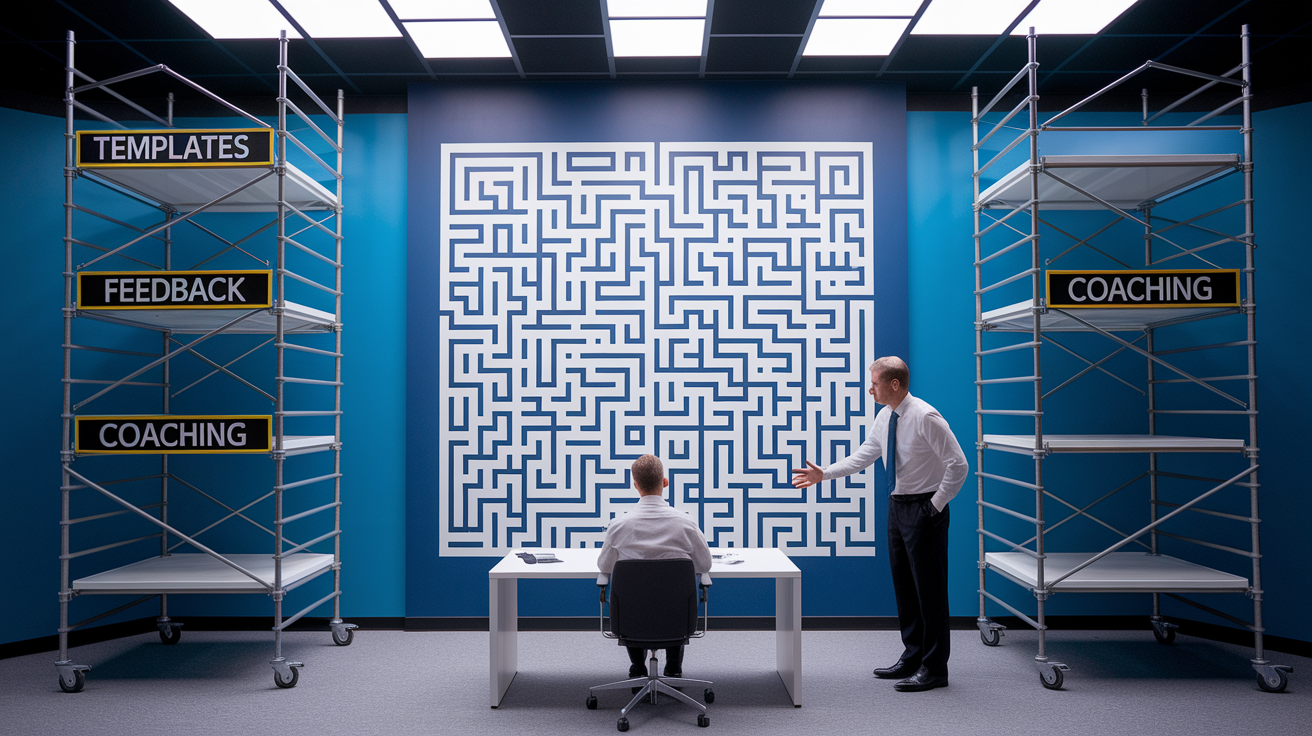
Self-directed learning isn’t automatic. Students and employees often struggle with setting realistic goals, aiming too high and getting overwhelmed or too low and missing growth. Many lack metacognitive skills at first, unable to monitor their own comprehension or recognize when a strategy isn’t working. Evaluating sources is another common challenge. Learners trust unreliable information or get lost in low-quality materials. In classrooms, students skip the review and revision stage, treating learning as a one-pass activity and missing the consolidation that spaced repetition provides.
Access to resources and support varies. Not every learner has the same tools, internet access, or home environment. Self-regulation skills differ widely, and some need more scaffolding before they can function independently. Teachers and managers must recognize these gaps and provide structure without removing autonomy entirely. The goal is gradual release of responsibility. Start with clear templates, curated resources, and frequent check-ins, then slowly transfer control as learners demonstrate readiness.
Effective support systems:
- Scaffolding and modeling: Teachers and facilitators demonstrate goal-setting, research methods, and reflection by thinking aloud and sharing their own learning processes.
- Clear learning objectives: Providing SMART goals or Bloom-based objectives gives learners a concrete target and reduces guessing.
- Curated resources: Pre-vetted articles, videos, and tools guide exploration without overwhelming learners with open-ended internet searches.
- Constructive feedback and coaching: Regular, specific feedback on progress, strategy use, and self-assessment helps learners adjust and improve.
- Accountability structures: Check-ins, peer teach-backs, reflection journals, and progress documentation create external checkpoints that support internal motivation until self-regulation becomes habitual.
Designing Personal Learning Plans for Self‑Directed Study

A personal learning plan is a roadmap connecting where you are now to where you want to be. Start by mapping the topic or skill. Break it into smaller chunks so the path feels manageable. Use a goal framework like SMART to write one clear objective for each chunk. Instead of “Learn Python,” write “By the end of this week, I’ll write a working Python script that reads a CSV file and prints the total of one column.”
Next, identify resources and strategies. List tutorials, documentation, books, mentors, or study groups you’ll use. Decide on a format for capturing and organizing what you learn. Two-column notes work well for definitions and examples, mind maps show relationships between concepts, and learning journals combine notes with reflection prompts. Schedule spaced review sessions so you revisit material at increasing intervals, which strengthens memory and catches gaps early.
Build reflection into the plan from the start. Set weekly or project-based checkpoints where you review progress, assess what worked, and adjust goals or methods. Reflection isn’t extra. It’s the mechanism that turns a collection of activities into a learning system. When you ask yourself, “What will I teach someone tomorrow about this?” you force your brain to organize and consolidate, which is where real understanding happens.
Tools and Templates for Planning
Simple, reusable formats help learners stay organized and focused:
- Learning journals: A notebook or digital document where you record goals, daily or weekly progress, challenges, reflections, and next steps. Writing by hand or typing forces you to process information actively.
- Mind maps: Visual diagrams showing a central topic with branches for subtopics, definitions, examples, and connections. Useful for prereading or summarizing complex systems.
- Two-column notes: A table with “Main Idea” on the left and “Details / Examples / Questions” on the right. This format separates big concepts from supporting information and makes review easier.
- Spaced review schedules: A simple calendar or checklist marking when to revisit material (one day later, three days later, one week later, two weeks later). Spacing combats forgetting and builds long-term retention.
Digital Tools and Technology That Support Self‑Directed Learning

Technology makes self-directed learning more flexible, trackable, and personalized. Note-taking apps let you capture ideas on any device, tag topics for easy search, and embed links or images. Apps like Notion, Obsidian, or OneNote support both structured templates and freeform exploration, adapting to different learning styles. Digital cueing systems (highlighting, commenting, or tagging confusion points) mirror the paper-based methods used in scaffolded classroom note-taking but add searchability and portability.
Spaced repetition tools use algorithms to schedule review sessions at optimal intervals, automatically prompting you to revisit flashcards or quiz questions just before you’re likely to forget. Tools like Anki or Quizlet reduce the planning burden and ensure consistent practice without manual tracking. Adaptive learning platforms adjust difficulty and content based on your performance, offering personalized pathways that match current skill levels and accelerate progress in weak areas.
E-portfolios provide a centralized space to document learning artifacts (projects, reflections, code samples, writing, presentations) and track progress over time. Platforms like Seesaw, Mahara, or GitHub let you organize evidence, share work with peers or mentors, and reflect on growth across months or years. Microcredential and badge systems offer visible markers of competency, letting learners set modular goals, demonstrate mastery, and build a portfolio of verified skills recognized by employers and institutions.
| Tool Type | How It Supports SDL |
|---|---|
| Note-taking apps (Notion, Obsidian, OneNote) | Organize notes, templates, and reflections; support cueing systems and searchable archives; enable two-column formats and mind map diagrams. |
| Spaced repetition tools (Anki, Quizlet) | Automate review schedules; prompt retrieval practice at optimal intervals; reduce manual planning and improve long-term retention. |
| Adaptive learning platforms (Khan Academy, Coursera, Duolingo) | Adjust content difficulty based on performance; personalize learning pathways; provide immediate feedback and progress tracking. |
| E-portfolios (Seesaw, Mahara, GitHub) | Centralize learning artifacts; document progress over time; enable reflection and peer feedback; showcase competencies to mentors or employers. |
| Microcredential and badge systems (Credly, Badgr) | Set modular, skill-specific goals; verify competency with portable credentials; build visible evidence of continuous learning for career advancement. |
Assessment Approaches for Evaluating Self‑Directed Learning

Self-directed learning requires assessment methods that capture process, not just final products. Self-assessment is foundational. You compare your work to a goal, rubric, or model and identify strengths and gaps. Reflection cycles embedded in the learning plan prompt regular evaluation: “Did I hit my note-taking goal this week? What strategy helped most? What will I change?” These prompts train you to evaluate honestly and adjust independently.
Formative assessment happens throughout the learning process, not just at the end. Teachers or managers use check-ins, draft reviews, teach-backs, and peer feedback sessions to monitor progress and provide guidance before mistakes become habits. Summative assessment at the end of a project or unit measures final outcomes but should include evidence of the learning journey (journals, drafts, collaborative notes, and reflections) alongside the finished product.
Common assessment methods for self-directed learning:
- Learning portfolios: Collections of artifacts (notes, projects, reflections, peer feedback) that document growth over time and show how goals were met or adjusted.
- Teach-back presentations: You explain what you’ve learned to a peer, small group, or class, demonstrating understanding and receiving immediate questions that reveal gaps.
- Self-evaluation rubrics: You use a checklist or scoring guide to rate your own work on criteria like goal clarity, resource selection, strategy use, and reflection quality.
- Collaborative revision artifacts: Joint notes or group projects where peers identify and fill each other’s knowledge gaps, producing a shared product that reflects collective learning.
Practical Classroom and Organizational Strategies to Promote Self‑Directed Learning

Teachers and managers can cultivate self-directed learning by modeling the behaviors they want learners to adopt. Think aloud while setting a goal, choosing a resource, or reflecting on a strategy. Show curiosity by admitting when you don’t know something and demonstrating how you’d research the answer. When learners see adults treating learning as an ongoing, imperfect process, they internalize that mindset.
Provide clear learning objectives using frameworks like Bloom’s taxonomy or SMART goals, but involve learners in refining or personalizing them. Offer curated resources (a short list of vetted articles, tutorials, or tools) so learners can explore independently without getting lost. Incorporate structured reflection into every activity with simple prompts: “What did you accomplish today? What confused you? What will you do differently tomorrow?” Use collaborative activities like joint note-taking or partner teach-backs where students support each other’s learning, closing gaps and building communication skills.
Gradually transfer responsibility. Start with teacher-created templates and step-by-step instructions, then hand over template creation to learners. Begin with assigned topics, then let students choose from a list, then let them propose their own. Require one peer teach-back per unit so learners practice explaining and listening. In workplaces, involve employees in teaching. Ask “What will you teach me tomorrow?” after a learning session to prompt forward-looking commitment and accountability.
Coaching and Feedback Techniques
Constructive feedback is specific, timely, and focused on process as much as product. Instead of “Good job,” say “Your goal was clear and measurable, and your two-column notes helped you organize main ideas. Next time, try adding one reflection question at the end of each section to check your understanding.” Feedback should point to what worked, what didn’t, and one concrete next step.
Model accountability by setting your own visible learning goals and sharing progress with learners. Create regular check-in routines (weekly one-on-ones, progress journals due every Friday, or brief stand-up meetings where everyone shares one learning win and one challenge). Coaching isn’t about giving answers. It’s about asking questions that guide learners to diagnose their own problems and plan solutions. “What did you try? What happened? What could you try next?” puts the cognitive work on the learner while keeping them supported.
Final Words
in the action, we defined self-directed learning, set it apart from self-regulated learning, and walked through practical steps, classroom and workplace examples, tools, and assessment ideas.
Take a tiny next step: pick a clear goal, try a short learning sprint, and jot down what you tried and what changed.
If you’re asking what is self directed learning, it’s owning your learning—setting goals, choosing strategies, and checking results. Keep going; this skill grows with practice.
FAQ
Q: What is the meaning of self-directed learning and which description fits best?
A: The meaning of self-directed learning is a learner-centered approach where individuals diagnose needs, set goals, choose resources and strategies, act on them, and evaluate outcomes while staying curious and responsible.
Q: What are examples of self-directed learning?
A: Examples of self-directed learning include a student researching and presenting a project, medical learners analyzing cases, an employee upskilling with chosen resources, peer teach-backs, and creating e-portfolios or creative artifacts.
Q: What are the 5 steps of self-directed learning?
A: The five steps of self-directed learning are diagnose learning needs, set specific goals, select resources, apply learning strategies, and evaluate outcomes to reflect and plan the next steps.