
Classrooms alone leave many students ready for tests but not ready for work.
Work-based learning (WBL) fixes that by mixing classroom lessons with real job tasks and mentor support.
Students gain technical skills, communication habits, and clearer career choices while building professional networks employers trust.
This post shows how practical WBL models—internships, co-ops, simulations, and apprenticeships—bridge school and work, and why that bridge transforms student success.
We’ll also cover funding rules, program design, and quick wins to get started.
Comprehensive Overview of Work‑Based Learning Foundations

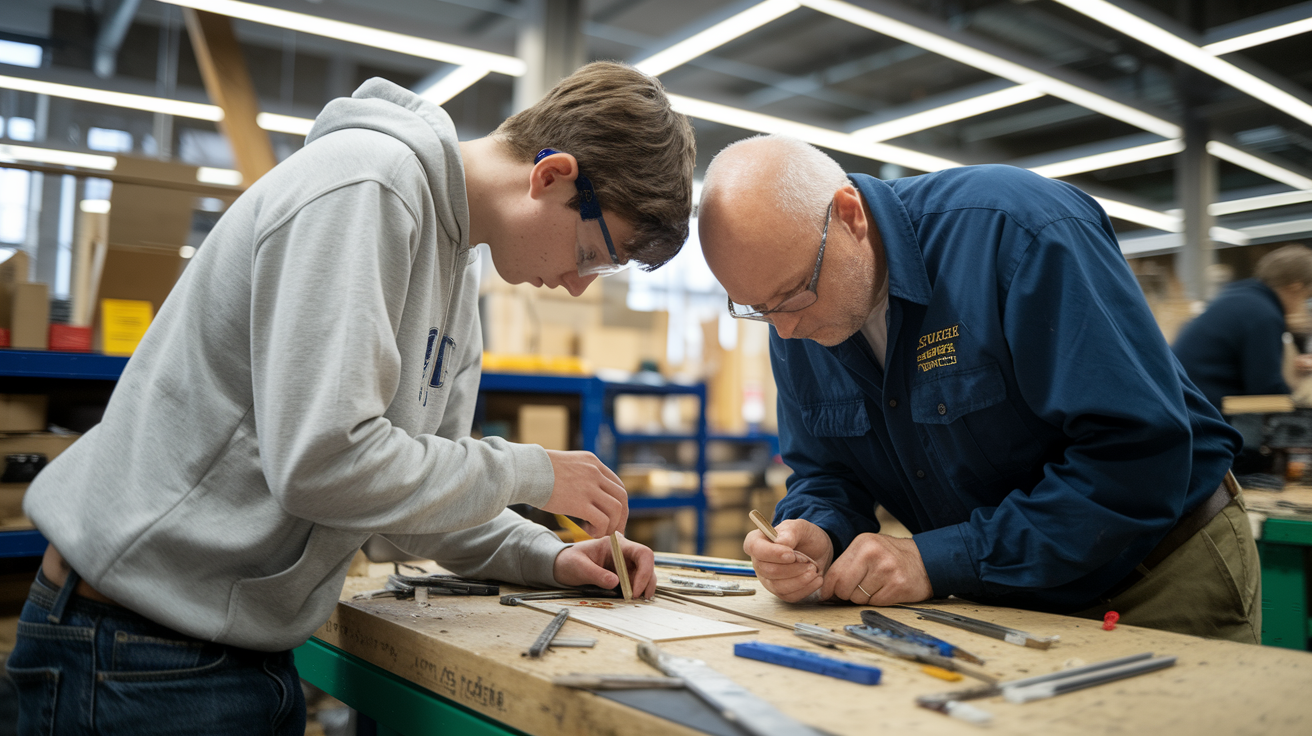
Work-based learning (or WBL) mixes classroom instruction with actual workplace experience. The setup rests on three pieces: matching classroom skills to what workplaces need, applying those skills in real or virtual job settings, and getting support from both teachers and workplace mentors. It’s different from the usual lecture and test routine. Students do real tasks, like writing code, shadowing a nurse, assembling parts, or pitching marketing ideas. Then they reflect on how that connects to what they’re learning in class.
Students who go through WBL programs consistently talk about gains in technical skills, soft skills like communication and teamwork, and getting clarity on what specific careers actually involve day to day. They build networks with professionals who can offer guidance, references, and leads on future jobs. Starting exposure early (elementary school through high school and into college) strengthens readiness for STEM and non-STEM paths alike. Traditional classroom-only education can teach theory just fine. But WBL bridges the gap between knowing a concept and actually using it to solve a real problem under workplace conditions.
Three federal laws recognize and fund WBL. The Every Student Succeeds Act (ESSA, 2015) lets local and federal funds support WBL programs. The Workforce Innovation and Opportunity Act (WIOA, 2014) ties WBL to Job Corps, vocational rehab, and programs for employees with disabilities. Perkins V (Strengthening Career and Technical Education for the 21st Century Act) defines WBL as prolonged interactions in workplace or simulated settings that align with classroom instruction. Together, these laws provide a regulatory foundation and funding pathways for schools, employers, and workforce boards to develop structured experiences.
Major Work‑Based Learning Models and Their Structures

WBL takes several forms. Each one has its own duration, level of engagement, and learning focus. Picking the right model depends on where the learner is, what the employer can handle, and which skills the program wants to build.
Internships
Internships place learners in entry-level work for a defined period, usually a few months. Participants do real tasks (data entry, customer service calls, lab prep) under supervision, often with assigned mentors. A lot of internships require formal applications and interviews, mirroring the hiring process students will face later.
Externships
Externships pair a learner with a specific professional for a short immersion, typically one day up to a few weeks. The goal is observation. Seeing how a physical therapist manages a caseload, how a project manager runs a daily standup. Limited task participation. Externships give you a fast snapshot of a role without the commitment of a full internship.
Job Simulations
Job simulations are short, focused programs that ask participants to complete role-relevant tasks, either online or in person. A marketing simulation might ask you to draft a campaign brief and get feedback from a real marketer. Simulations condense real work into rapid skill-building exercises with immediate feedback loops.
Job Shadowing
Job shadowing typically lasts a single day. The learner follows one person through their workday, observing meetings, tasks, decisions. There’s little to no task participation. This is purely about seeing the reality of a job up close.
Cooperative Education (Co‑ops)
Co-ops are full-time, paid positions that alternate with academic terms. A student might work full-time for six months in the fall and winter, then return to school full-time in the spring and summer, repeating the cycle for one to two years. Co-ops give extended, immersive experience and are standard in fields like engineering and business.
| Model | Typical Duration |
|---|---|
| Internships | 4–12 weeks |
| Externships | 1 day to a few weeks |
| Job Simulations | 1–12 weeks |
| Job Shadowing | 1 day |
| Cooperative Education | 6–12 months per work term |
| Apprenticeships | 1–4 years |
Work‑Based Learning Benefits for Students and Employers

WBL delivers measurable advantages for both sides. Students gain technical proficiency (learning how to run diagnostic tests, write production code, or reconcile financial statements) through hands-on repetition that no textbook can replicate. They also develop soft skills like problem-solving, creativity, and navigating workplace norms. One student might realize they love the fast pace of a restaurant kitchen. Another might discover that hospital shift work isn’t for them. Both insights are valuable.
For employers, WBL creates talent pipelines. Instead of hiring strangers, companies can recruit candidates who already understand the company culture, systems, and expectations. Participants arrive with fewer onboarding gaps and stronger applied skills. Longitudinal studies show that students who participate in sustained WBL (programs that start in elementary school and continue through postsecondary education) demonstrate improvements in technical proficiency, teamwork, communication, and problem-solving.
Student Benefits:
Gain technical and job-specific skills through real tasks and simulations. Build soft skills like communication, teamwork, problem-solving, and creativity. Clarify career interests by experiencing actual roles and company cultures.
Employer Benefits:
Access a pipeline of role-ready candidates with practical experience. Reduce hiring and training costs by onboarding familiar participants. Strengthen alignment between industry needs and educational curricula.
Designing and Implementing Work‑Based Learning Programs

Building a WBL program from scratch can feel overwhelming. But breaking it into sequential steps makes the process manageable. Start small, measure what works, then expand.
-
Conduct a needs analysis and map stakeholders. Identify local employers with hiring needs, understand which skills they value most, and figure out which teachers, counselors, or community partners can help coordinate placements.
-
Define competencies and align with curriculum. Choose three to six measurable competencies (like “troubleshoot network issues” or “conduct a patient intake interview”) and map them to existing course outcomes so students can earn credit while gaining experience.
-
Recruit employers and formalize partnerships. Draft memoranda of understanding (MOUs) that spell out roles, hours, supervision expectations, liability insurance, and compensation. Clear agreements prevent confusion later.
-
Design the schedule, supervision plan, and compensation model. Decide whether placements will happen during the school day, after school, or in alternating terms. Set mentor contact time (for example, a weekly 30-minute check-in) and confirm whether students will be paid hourly, receive a stipend, or earn course credit.
-
Ensure legal, safety, and insurance compliance. Verify wage and hour laws, child labor restrictions for minors, workers’ compensation coverage, and any required background checks or health screenings.
-
Implement assessment, credentialing, and data systems. Use competency rubrics, mentor evaluations, and student reflections to track progress. Build a simple dashboard to monitor placement rates, completion rates, and employment outcomes at six and twelve months post-program.
Integrating Work‑Based Learning Into Curriculum and Instruction

WBL works best when workplace tasks map directly to classroom learning objectives. If a biology class covers cell structure, a related WBL placement might involve preparing slides in a lab or assisting with microscopy in a clinical setting. That alignment helps students see why they learned mitochondria functions in the first place.
Competency-based education (CBE) pairs naturally with WBL because CBE advances students on demonstrated mastery rather than seat time. Instead of sitting through a fixed semester, a student completes modules when they prove proficiency, freeing up schedule flexibility for workplace placements. Many institutions award one academic credit for every 45 to 60 hours of supervised work, depending on the rigor and alignment of the experience.
Use competency modules. Break courses into skills-based units that map to three to six workplace competencies. Award credit for supervised work. Formalize the hours-to-credit conversion so students earn academic progress. Incorporate simulations when placements are limited. Virtual job simulations, role-plays, or case competitions can substitute when employer capacity is tight. Alternate schedules for co-ops. Design full-time work terms that alternate with full-time academic terms, balancing immersion and instruction. Embed reflection assignments. Ask students to connect their workplace tasks to classroom concepts through journals, presentations, or portfolios.
Partnerships and Workplace Supervision Models in Work‑Based Learning

Strong WBL programs rely on reliable employer partners and structured workplace mentorship. Employers need to understand that hosting a learner isn’t the same as hiring an employee. There’s a teaching component, regular feedback loops, and coordination with school staff.
Workplace mentors typically provide one to two hours of structured contact per week, including check-ins, task review, and informal coaching. Recommended mentor-to-learner ratios range from one mentor for every six learners to one for every twelve, depending on the complexity of the tasks. A hospital nursing externship might use a 1:6 ratio because procedures are delicate and supervision is intensive. A marketing internship reviewing social media drafts might use 1:12 because tasks are less risky and more independent.
MOUs formalize the relationship. They define roles (who supervises, who coordinates with the school), safety protocols (required training, liability coverage), hours (how many per week, which days), and compensation (hourly wage, stipend, or credit only). When everyone signs the same document, expectations stay aligned and disputes get resolved faster.
Mentors meet with learners weekly for at least 30 to 60 minutes of structured feedback. Schools assign a faculty or staff liaison to check in with both the student and the mentor. Employers provide task variety so students experience multiple aspects of the role. Regular mid-term reviews catch problems early and adjust placements if needed.
Legal, Safety, and Funding Requirements for Work‑Based Learning

WBL programs must navigate wage and hour laws, child labor regulations, insurance requirements, and background checks. Skipping compliance creates legal risk for schools and employers alike.
Wage and hour laws vary by jurisdiction, but paid placements must meet minimum wage and overtime rules. Unpaid internships are allowed in some educational contexts, but only when the primary beneficiary is the student and the placement meets strict criteria. Child labor laws set limits on hours and tasks for minors. No late-night shifts, no hazardous machinery, no work that interferes with schooling.
Workers’ compensation and liability insurance must cover learners during placements. Some states require background checks and health screenings, especially for roles in healthcare, education, or child services. Schools and employers should consult legal counsel early to document policies and avoid surprises.
| Requirement | Key Consideration |
|---|---|
| Wage & Hour Compliance | Paid placements must meet minimum wage and overtime rules; unpaid placements must meet educational criteria. |
| Child Labor Restrictions | Minors face limits on hours, tasks, and work environments; verify local laws before placing high school students. |
| Insurance & Background Checks | Workers’ comp and liability insurance required; background checks and health screenings for high-risk placements. |
Funding typically comes from a mix of employer contributions (wages or stipends), institutional support (administrative staff, coordination), and local or state workforce grants. Federal acts like ESSA, WIOA, and Perkins V connect WBL to multiple funding streams. Industry associations and workforce boards may also contribute funds or in-kind support like mentor training or safety equipment.
Assessing Performance and Outcomes in Work‑Based Learning

Assessment in WBL tracks both individual competency and program effectiveness. For individual students, competency rubrics define proficiency levels (novice, developing, proficient, advanced) for each skill. A mentor might rate a student’s troubleshooting ability on a one-to-five scale and provide written feedback on strengths and gaps.
Job simulations often include immediate feedback loops. A student submits a draft campaign brief, gets scored on clarity and strategy, and revises it within a day or two. That rapid cycle mimics real workplace deadlines and helps students internalize quality standards faster than waiting weeks for a grade.
Tools and Documentation
Most programs use a combination of competency checklists, supervisor evaluation forms, student e-portfolios, and reflective assignments. E-portfolios compile work samples (code commits, patient intake forms, project plans) alongside reflections that connect tasks to classroom learning. Mentor evaluations capture workplace performance, while school-side assessments ensure students meet academic standards.
Key Performance Indicators (KPIs) to Track:
Placement rate: Percentage of participants successfully placed in a WBL experience.
Credential attainment rate: Percentage earning certificates, industry credentials, or course credits.
Six and twelve-month employment retention: Percentage employed in the field six and twelve months after completion.
Employer satisfaction score: Survey-based rating (one to five scale) from workplace supervisors.
Competency mastery rates: Percentage of students meeting proficiency on defined rubrics.
Wage progression: Average starting wage and change at six to twelve months post-program.
Sector‑Specific Examples of Work‑Based Learning Programs

Healthcare programs often require clinical placements of 120 to 600 hours per term, depending on the profession. Nursing students rotate through hospital units, practicing patient assessments and medication administration under licensed supervision. Dental hygiene students complete chair-side hours in clinics, mastering equipment and patient interaction before graduation.
Manufacturing apprenticeships combine multi-year training sequences (often 4,000 to 8,000 total hours) with paid work and classroom instruction. A three-year machinist apprenticeship might include 1,600 hours per year on the shop floor plus 144 hours per year in technical courses, culminating in an industry credential. Participants leave with journeyman status and a clear path to higher-level roles.
Construction practicums place students on job sites where they learn blueprint reading, tool safety, and trade-specific techniques like framing, electrical rough-in, or plumbing installation. Supervised site work often alternates with classroom sessions on codes, materials, and project management. Co-op models are common, with students working full-time during summer and part-time during academic terms.
Digital platforms enable remote WBL in fields like IT, finance, and digital marketing. Students complete micro-internships (short projects with defined deliverables), submitting work online and receiving feedback from industry professionals. A six-week marketing project might deliver a campaign brief, social media calendar, and performance analysis, assessed by a rubric and reviewed by a mentor at a real agency.
Scaling and Improving Work‑Based Learning Programs

Start with a small pilot. Ten to twenty-five students and three to five employer partners. That lets you test logistics, supervision models, and assessment tools. Running a pilot lets you identify friction points (scheduling conflicts, unclear expectations, legal gaps) before scaling to hundreds of participants.
After the first six months, review your KPIs. Are placement rates meeting targets? Are mentors providing consistent feedback? Are students demonstrating competency gains? Use those answers to adjust mentor ratios, refine MOUs, and streamline coordination. Annual reviews keep the program aligned with employer needs and student outcomes.
-
Run a pilot with 10 to 25 students and 3 to 5 employers. Test all systems at small scale before expanding.
-
Review KPIs at six months. Check placement rates, mentor engagement, and student competency gains. Adjust supervision and scheduling as needed.
-
Expand partnerships gradually. Add two to three new employers per term to maintain quality and avoid overwhelming coordination staff.
-
Iterate assessment tools annually. Refine rubrics, feedback forms, and data dashboards based on what actually gets used by mentors and students.
-
Build a feedback loop with employers. Survey mentors every term to capture what’s working and what needs fixing. Use their input to improve mentor training and student preparation.
Final Words
You’ve seen how work-based learning links classroom instruction with hands-on workplace models like internships, apprenticeships, co-ops and simulations, plus the legal, supervision and assessment pieces that make them work.
We walked through design steps, partnership roles and practical assessment tools so programs can start small and scale. If you follow the roadmap and cover needs analysis, competency mapping, employer recruitment, safe scheduling, legal checks and clear evaluation, you’ll build something that gives real skills.
Keep iterating and measuring outcomes. Work based learning turns theory into ready-to-hire skills, and it’s within reach.
FAQ
Q: What is meant by work-based learning? What is a work-based learning course?
A: Work-based learning means combining aligned classroom instruction with real or simulated workplace experience guided by mentors. A work-based learning course is a credited class with clear objectives, supervised practical tasks, and assessment.
Q: What are the requirements for work-based learning in Georgia?
A: The requirements for work-based learning in Georgia are written agreements (MOUs), an approved learning plan, employer supervision, safety and wage-law compliance, parental consent if under 18, and local district credit policies.
Q: What is an example of a work-based learning program?
A: An example of a work-based learning program is a semester internship where a student performs entry-level tasks for 8–12 weeks, gets mentor feedback, links tasks to classroom objectives, and builds a portfolio or earns credit.